


Intro
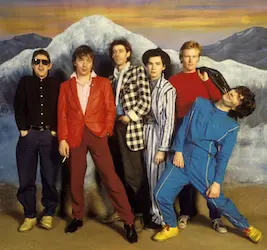
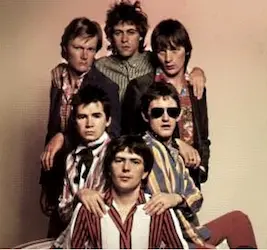
During my late '90s Napster deepdive of new wave music, I stumbled upon the Boomtown Rats. I quickly got hooked by their guitar attacks and Geldof’s knife-edge vocals, and subject matter that most bands of the era sidestepped. But the Boomtown Rats knew how to channel all of this in a controlled manner and mixed it up with saxophones, syncopated rhythms, etc., making a whole album or playlists’ listening palatable (I can’t say the same for the Sex Pistols’). Full disclosure: I’m drawing heavily on their masterpiece The Fine Art of Surfacing for this article (at the expense of their last two albums). But all six are worth a listen!
The Rat Race Turns Deadly
While the Sex Pistols spat nihilism, the Boomtown Rats dissected society with tabloid precision. Geldof’s journalism background shows - his lyrics read like headlines written by a cynic who still believes in decency.
Diamond Smiles
In their sophomore album A Tonic for the Troops, the Boomtown Rats discussed suicide with Living On an Island (as well as narrating Hitler in (I Never Loved) Eva Braun. In this case, it’s a glamour queen that reminded me of fellow American Marilyn Monroe. On further examination, Diamond Smiles satirizes the Dublin high-society scene. Everyone views the woman in the song as perfect, and then she kills herself during a gala. Admittedly, I didn’t understand all of the lyrics in Diamond Smiles, but the description of her self-hanging is a master class in vivid imagery. The line “(she) went out kicking at the perfumed air” especially so. What also makes it sting is the bounce: bright piano, hand-claps, and a sing-along chorus underscoring a suicide note. It’s tabloids turned into theatre - tragedy you can tap your foot to.
I Don’t Like Mondays
A song about suicide is pretty heavy subject matter, but the Boomtown Rats topped it earlier in the same album with one about a mass homicide. I Don’t Like Mondays was inspired by an at-the-time recent school shooting in San Diego. The swirling piano arpeggio in the beginning is a great hook. In the song, Geldof switches between before and after the shooting. He eloquently describes the girl’s sudden snapping with “The silicon chip inside her head gets switched to overload”. In the vocals, Geldof sounds sad and frustrated as he struggles to find a reason for her murders. For example, her dad “always said she was good as gold”, and “her mother feels so shocked”. He’s also good at delivering the girl’s lines, in particular the chilling “down, down, shoot it all down!”. The empathy/disgust dichotomy cements I Don’t Like Mondays as a new wave classic. And Geldof wrote this song in only hours to boot!
 Preview Boomtown Rats
Building a Better Rat Trap
Beneath the sneer, the Rats were chroniclers of monotony. They turned small-town suffocation and economic stagnation into operatic street anthems - equal parts Springsteen and snarl.
Lookin’ After No. 1
In their self-titled debut, they vividly describe the dog-eat-dog world with Lookin’ After No. 1. With a casual listen, the aggressive melody and vocals, along with lines like “I’ll step on your face, your mother’s grave”, suggest a pure exercise in hostility. But a lyric early in the song, “I’ve waited on this dole queue so long”, shows it’s more a social commentary on how a garbage economy can cause people to resort to an “every person for themselves” mentality. And the narrator says this holding his nose, not liking what he has become. Indeed, Geldof delivers a great takedown of unbridled ambition at others’ expense.
Rat Trap
Rat Trap, like Lookin’ After No. 1, has sharp social commentary, but is more developed in that it’s a melodic and lyrically dense, in the style of Bruce Springsteen’s street operas (but with a tad more spit). It’s one of the best odes to monotony I’ve heard thanks in part to many and varied references to boredom. For example, “It’s only 8 o’clock, but you’re already bored” and the mantra of “Walk, don’t walk”. Indeed, the townspeople described are repeating themselves more than Punxsutawney in the movie Groundhog Day. The dirty saxophone adds grit to the song. While the song has punk sneer, the five-minute length, sax solo, and cinematic storytelling give it that extra. And the result? the first new wave song ever to top the UK charts (knocking Grease’s Summer Nights off the #1 perch).
Preview Boomtown RatsDon’t Get Ratted Out
As the ’80s began, Geldof aimed his pen inward. The Rats turned their outsider energy toward Ireland itself, exposing the cracks in faith, politics, and privacy with reggae rhythms and righteous disgust.
Someone’s Lookin’ at You
Someone’s Lookin’ at You, despite the obvious title, is a poignant song about paranoia and government surveillance. Geldof warns of friends who won’t think twice before ratting you out to the Irish government, especially with those “paper-thin walls”. And while some of the references are Ireland-specific, it also works as a Cold War paranoia or 1984 surveillance song (better than Eurythmics' Sexcrime 1984). Muted keyboards, clipped rhythm, a voice more resigned than raging give the listener a sense of claustrophobia. It’s the sound of protest learning to whisper. Geldof’s weary vocals show evolution in the Boomtown Rats: it’s great to mix tracks like this in with the ragers. It’s position as an album opener gives it maximum impact - making you uneasy before I Don’t Like Mondays lowers the boom.
Banana Republic
Geldof was an outspoken critic of the omnipresent (in Ireland) Catholic Church. For that the Boomtown Rats were banned from performing on the Irish national TV channel (RTÉ). As the pen is mightier than the sword, Geldof wrote a withering rebuke. For their 1981 album Mondo Bongo, the Boomtown Rats borrowed heavily from reggae and dub, giving their sound a Caribbean flair. But they also borrow from there lyrically in Banana Republic. Despite the sunshiny title and reggae shuffle and drums, Geldof is directing his vitriol inward, at their native Ireland. He pulls no punches, crowning Ireland, rather than Jamaica, the “Septic Isle” in only the second line. Geldof then paints a picture of the police being corrupt and brutal, with the powerful Catholic Church complicit. Needless to say, RTÉ censored Banana Republic.
Preview Boomtown RatsAvailable in the Vault
Outro
For all their sneer and swagger, the Boomtown Rats were never just punks with saxophones. They were reporters with instruments - capturing a country and a generation on the edge of exhaustion. From dole-queue despair to Dublin self-loathing, they made pop sound like protest without losing melody or humor. By the time Mondo Bongo faded, their fury had mellowed, but the questions lingered. Years later, he’d channel that same intensity into organizing Live Aid - and trimming Adam Ant's set to a single song. Listening today, you still hear the spark of a band that made anger articulate - and made Ireland loud.
A new one every month.
($8/month USD) Secure checkout with Gumroad

This Week on Synth and Swagger:
Artist Spotlight: Do the Bangles JangleOceania New Wave Song Commentaries (3 free, 6 vault)
Coming Thursday - New Wave Quick Hit