




Intro
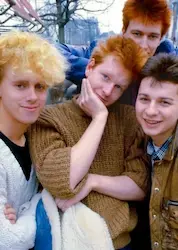
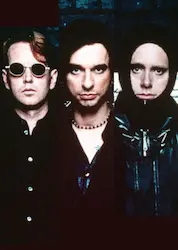
Depeche Mode is an interesting case in the annals of new wave for several reasons, two of which are:
- British consistency: In their native UK, all 15 of their studio albums were top 10.
- US reversal: They weren’t that well-known in the US until the turn of the ‘90s with Violator. Most other new wave bands experienced the reverse.
Furthermore, like Squeeze, they had a debut that became uncharacteristic of them. While Depeche’s Speak and Spell is solid (album tracks too!), it’s better thought of as Vince Clarke’s stepping stone to Yaz/Erasure fame. After Vince’s departure, Depeche truly became a story of Gahan, Gore, and Fletcher’s evolution. Few bands transformed alienation into mass communion as effectively - or as consistently - as Depeche Mode. Let’s focus on how they got there…
Feeling it Out (‘82 to ‘85)
Vince leaving Depeche was abrupt, as evidenced by him three weeks later answering a newspaper ad asking for a bandmate (by none other than Alison Moyet!). As a result, songwriting and synth reins were thrown to Gore and Fletcher. That was unfortunately obvious when listening to their quick follow-up, A Broken Frame. It’s clear they want to break away from Vince’s bouncy synths but weren’t sure of the best way. Rather than the brooding synths and lyrical angst we all know and love, many are relatively flat and tame. See You and Satellite of Love are examples.
To Depeche’s credit, they quickly got off the critical and creative mat and released Construction Time Again the following year (my favorite of their early work). They made a good start in developing their ‘90s persona with dark clothing and dark lyrics. I love the literally industrial synths (evidenced by Pipeline and Fools). They (and industrial bands like Nine Inch Nails) would polish these later but they fit this album great. Gore lyrically advances, challenging you with themes of corporate greed (Everything Counts and nihilism (Shame).
Some Great Reward came next, bringing to the table more sonic diversity. Though People are People was the hit at the time, its naive lyrics and and play-it-safe synths make it not a good example of the band’s evolution. Before Gahan had nailed the gloom with his vocals, but on some tracks here he adds menace (like in Master and Servant). Gore also introduced a new angle with religion - Blasphemous Rumours has the narrator wondering if God is malevolently selective with His mercy after a teenager survives a suicide attempt only to have another one suffer a horrible accident. The result is one of the most scathing songs about religion in new wave.
Available in the Vault

Hitting Their Stride (‘86 to ‘89)
Still obscure in the US, Depeche Mode released a greatest hits album geared toward them. The last track was a taster of the new sound they were working on in Fly On The Windscreen. Gore’s lyrics took a newly sinister turn compared to before, while Gahan gives a master class on nihilism while still sounding forceful. These elements persisted in their efforts ever since. The synths, though, were the status quo…
A year later, Black Celebration was released, which included a new version of Windscreen. In it, Wilder’s sonics caught up to the rest of the song; his reverb-laden spoken-word sections and harsh, complex synth riffs are hallmarks of his now-meticulous sound design. The two versions are the bridge between Depeche old school and new school. The rest of the album has examples of peak Gore and Gahan, Question of Time and Stripped included. After a long search for its identity, Depeche now imposed it. Gore’s lyrics became less abstract and more declarative, while Gahan leaned into a commanding, preacher-like delivery. Wilder’s increasingly detailed sound design gave their songs physical weight - think chains, breaths, metallic thuds - turning synthpop into something tactile.
Music For The Masses had Gore varying the levels of darkness more which make its themes fresher. Even relying less on the fatalistic playbook, Gore is in top form, with descriptive and emotive lyrics. One of my favorites is “To put it in words, to write it down, To put it in words, to write it down, That is walking on hallowed ground”, in reference to religion in Sacred. And regardless of track, the signature Depeche Mode sonics are there. Appropriately given the album title, the opener Never Let Me Down Again is a stomper which suggested Depeche wanted to make their sound bigger and hit the arena circuit. Live, Depeche Mode is terrific in making isolation and angst a communal experience, and it all started with Let Me Down. Indeed, this was the moment when Depeche’s introspective themes stopped being private confessions and became shared rituals songs built not just to be heard, but to be felt by thousands at once.
 Preview Depeche Mode
Available in the Vault
Peak, Crash, Rebound (‘90 to ‘97)
With their new sound established, Depeche Mode still found US fame elusive… until 1990’s Violator. To some extent, this album reminds me of INXS' Kick: besides being American breakout albums, both have the bands doubling down on a stadium sound that was hinted at in the album before it. Importantly, the twangy guitar-forward intro helped give Personal Jesus a chance with the Americans as synths were becoming out of fashion in rock, making it the ultimate synthpop Trojan Horse track. Finally they got a top-ten album in the US, starting an 8-album streak there. All of a sudden, they were filling 20,000-person arenas across the world.
Songs of Faith and Devotion followed, with Depeche taking what worked with Violator and expanding their sonic palette accordingly. Guitars are more prominent and sonically vary between the tracks (for instance, the crunchiness of I Feel You vs the droning tremolo of Walking in My Shoes. This shows how eclectic Depeche Mode’s approach to guitars had become. Condemnation goes full-on gospel with Gahan comfortable as preacher, while Rush opts for a German techno-sound. Faith and Devotion is indeed the peak of Depeche’s “larger-than-life” phase sonically - even the Question of Lust / Stripped descendent One Caress has this, with its dramatic violins and Gore’s more histrionic-than-usual vocals. But the band was experiencing personal issues that dwarfed the acrimonious creative differences or injuries that sidelined tours. Gore attempted suicide, while Gahan almost died himself with drug abuse. And the sonic bedrock quit in Wilder.
Amazingly back from the brink, Depeche released 1997’s Ultra. It doesn’t sound like a comeback album. It sounds like an album made by people who are surprised they’re still here. As a result, the arena-feel is scaled back in favor of their late ‘80s dark monologues. Some songs are direct references to their ‘90s personal turmoil. For instance, Barrel of a Gun is about Gore and Gahan facing the double barrel of depression and drug abuse, and Home deals with Gore lifting himeself out of it.
Preview Depeche Mode⇩ Adam Ant Song Commentaries
Outro
Depeche Mode’s arc is unusual not because it’s dramatic, but because it’s sustained. From early uncertainty to late-’80s dominance, from near collapse to hard-won survival, they kept refining the same obsessions - faith, desire, guilt, power - until they became universal. What began as tentative post-Clarke experimentation ended as one of modern music’s most durable identities. Long after new wave faded, Depeche Mode endured by turning darkness into discipline, and discipline into devotion.
Jason's Commentaries

A new one every month.
($8/month USD) Secure checkout with Gumroad

This Week on Synth and Swagger:
Artist Spotlight: Do the Bangles JangleOceania New Wave Song Commentaries (3 free, 6 vault)
Coming Thursday - New Wave Quick Hit