





Intro
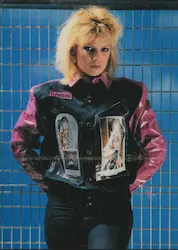
Kim Wilde burst onto the scene in 1981, armed with new wave hooks, cool confidence, and a famous musical family. But a few years later, the Wildes took a sharp turn toward dance-pop, complete with a more provocative image. The transition wasn’t entirely smooth: the new sound initially seemed bigger than Kim’s vocal personality. Yet over six albums, she grew into it, discovering an authority and emotional range that would define the next chapter of her career.Introducing the Wildes
Kim Wilde’s debut dropped in 1981. A family affair, her dad Marty, a 50s pop star, was on lyrics, while brother Ricky produced and composed. And while the album is certainly new wave with its driving melodies and subversion (e.g. “suburbia sprawling”), the Wildes inject oldies elements. Kim’s vocals play nice - they’re often breezy, recalling the Go-Go's Belinda Carlisle. I also hear some Nena in there.Kids in America
Kids in America was a solid intro to Kim Wilde. Marty’s ‘50s influence is felt through faux-doowop bits like the “woah-oh” and “la la la”, and an outro synth sounding like it was adapted from a sci-fi B-movie. Kim’s vocals are detached-but-cool, right at home in the new wave camp. This was good for a top-5 hit in many countries (the US a holdout with a #25 showing).
▶
Preview Kids In America
Kim Wilde
Selecting Synths
Select, while a far cry from Kim’s later work, had a couple of elements moving in that direction. The Wildes traded some of the guitars for synths (an eventual Kim staple). Also, with the subject matter becoming darker, it gave Kim a great chance to become more expressive, planting seeds for her later persona.Cambodia
Cambodia is an excellent example of this direction. Synths are front and center - atmospheric, but still catchy. Faux-druid chants reinforce the grand feel of it. Finally, Cambodia has a heavy Cold war theme, and tells a story of a lover gone off to one of its proxy wars. This is a great backdrop for Kim to expand her sound, and she capitalizes by holding more notes, fluctuations in volume and other vocal flourishes. The atmosphere would have sounded right at home alongside Peter Schilling in German-speaking Europe, where Select actually outperformed its predecessor. Meanwhile, she dropped out of the top 10 in the UK.▶
Preview Cambodia
Kim Wilde
Time to Get Catchy
Fresh off of Select, Kim and family thought outside the box with Catch as Catch Can. In many directions. One such direction featured is in House of Salome, driving electronic rhythms and floating synths, anticipated the dance-pop that would dominate Teases & Dares. The Wildes hadn’t committed to a new formula yet, but some of its ingredients were already in place.Love Blonde
Love Blonde was a particularly unlikely detour, trading new wave cool for a cheeky blend of big-band swing and rockabilly (the Marty connection at work). There’s actually some overlap between those styles and new wave, so Kim’s effective by drawing on her original vocal stylings. Her detached vocal style from the first two albums, come in handy here, allowing her to tease without hamming it up. Also, her punchy, brisk singing matches the retro beat of the song.▶
Preview Love Blonde
Kim Wilde
The Daring Pivot
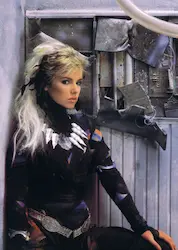
After Catch As Catch Can, Kim went to a new record label. And with that, Kim, family and label agreed to shift to a dance-pop style. Not just the sonics, but the image: Kim adopted a visual motif reminiscent of sci-fi like Barbarella. That being said, she was taken aback by how far the record label ran with it. Granted, the resulting album, Teases & Dares, got some harsh reviews. But in it was evolution - Wilde incorporated elements of it into her later dance-pop persona. And it has the first songs she wrote herself, including Shangri-La.The Second Time
The Second Time is an important bridge track in all this. Kim makes great strides in assertiveness, demanding a second round of sex and rebuffing pushback (sorry) from her lover. Unfortunately, Kim’s understated vocals don’t fully sell it. Indeed, she was still evolving from the breathless vocals that served her well before the pivot. But to be fair, the music’s over-the-top dance ante (and it being high in the mix) make it harder for Kim to compete.▶
Preview The Second Time
Kim Wilde
Another Step Forward
With lessons learned with Teases & Dares, its follow-up Another Step found Kim better adjusted to her new sound. Clearly Kim has found vocal assertiveness. For example, the title track has her sharply riffing off R&B duet partner Junior Giscombe. And her creative involvement surged: after testing the waters with two songs in Teases & Dares, Kim had a hand in roughly two-thirds of Another Step, establishing a songwriting role she’d maintain for decades. Back to assertiveness, the biggest example is…You Keep Me Hangin’ On
With her dad a ‘50s and ‘60s pop star, Kim covering the Supremes’ You Keep Me Hangin’ On was hardly a stretch. I’ve written before about how effectively she updates it, but the song also encapsulates her new sound. Kim doesn’t need to sound mean or menacing; the galloping synths supply the aggression while her vocals deliver the resolve. Unlike The Second Time, where the muscular production counterproductively tries to bolster her understated performance, here the two work in tandem as Kim kicks her boyfriend to the curb.▶
Preview You Keep Me Hangin On
Kim Wilde
Close to Dance-Pop Perfection
I gotta say, Kim looks positively locked in on the cover of Close! But does her performance reflect that? You bet! Close represented the culmination of Kim’s evolution from new waver to dance-pop phenomenon. And a large part of that is the emotion: sure, she nailed assertiveness in Another Step, but with Close Kim shows heart and vulnerability. For example, she expresses hurt and suspicion well in Never Trust a Stranger, while still showing resolve.You Came
After smaller and smaller stumbles, You Came is Full Pivot realized. The assertiveness and bravado Kim earned in Another Step is back in the form of confident vocals. But with You Came, inspired by the birth of her nephew, Kim clearly leveled up with affection. And she uses the bright, driving arrangement and uplifting chorus to emotionally release. Here, the dance beat is not a weapon but a momentum train to celebration. An interesting lyric by Kim is “in the space of a year, I watched the old me disappear”. To some extent, it’s autobiographical.▶
Preview You Came
Kim Wilde
Available in the Vault
Outro
Close did more than complete Kim Wilde’s pivot. It established a template she’d draw upon for decades: commanding vocals, emotional versatility, and a willingness to mix musical styles. She’s explored plenty of new territory since, but that foundation remains. In fact, she came full circle in 2025 with Closer, a deliberate companion to the album that cemented her transformation nearly four decades earlier.Like this article? The Vault has bonus writeups on seven articles.
A new one every month.
($8/month USD) Secure checkout with Gumroad