


Intro
This is your host, Jason D'Orazio, welcoming you to another episode of New Wave Beat. Today, we're cover some great new wave songs from 1985, which was a crossroads year in new wave music. That year, many popular rock artists teamed up for a large concert dubbed Live Aid to help combat Ethiopian famine. 1985 also saw a lot of change with new wave bands. For example, Duran Duran split into two spinoff bands, and Depeche Mode were making a pivotal change in their sound, etc. 1985 had the largest number of new wave bands/artists who had songs in the Billboard year-end chart (10 out of 100).
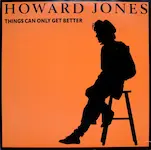
“Synth wizard Howard Jones debuted in 1984 with a shimmering set of synth pop, with little guitar to be found. He followed it up with his largest hit at the time, Things Can Only Get Better."
Take On Me (A-Ha)
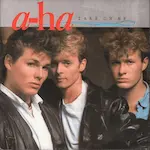
Let's start with Take On Me by Norwegian band A-Ha. They were debuted late in the new wave scene, but their first album, Hunting High And Low, was full of synthpop goodness. They're influenced by several earlier new wave/new romantic bands, including Duran Duran and Spandau Ballet.
A-Ha's second stab at making Take On Me a hit single paid massive dividends - it topped US charts, but also managed a top-10 showing in the year-end charts too.
Vocalist Morten Harket has a high register that can soar with the best. Take On Me's chorus features excellent vocal range, which makes it difficult for karaoke, but easy for replayability. The synths are also effervescent and supplement nicely. And the bridge has a memorable rapidfire synth section.
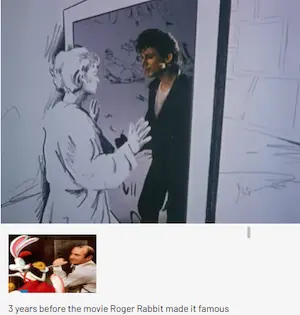
The drums are vigorous and remind me of those in Devo's Whip It (covered in my 1981 episode). Judging from the lyrics, the song might be about a proposed one-night stand. Harket's character tries to convince a love interest to take him on, and that evading is no better. In the chorus, Harket sings, "I'll be gone in a day or two." The video for Take On Me is one of the most famous, garnering over half a billion views on YouTube. It features memorable pencil sketch animations. In it, a woman is mentally absorbed in a black and white comic book featuring a racer (Harket). He then literally absorbs her in the comic. They're enjoying each others' company when a group of sore losers chase them with wrenches. Spoiler alert: by video's end, Harket's sketch character becomes a real person. A-Ha had some more minor hits in the US throughout the rest of the '80s, kept recording into the 2000s, and after a long hiatus in the 2010s, are touring again.

Don't You (Forget About Me) (Simple Minds)
Coming up to bat is Don't You (Forget About Me) by Simple Minds, hailing from Scotland. Simple Minds actually had been around in 1979 (early new wave). Their anthemic rock was sometimes compared to U2, but with more of a new wave flare. Don't You was actually around the time of their eighth album, and topped the US charts. This showing was helped by Don't You being featured in the 80s classic The Breakfast Club.
Simple Minds' vocalist, Jim Kerr, sings prominently and in the middle range. In Don't You, Kerr's delivery reminds me of a lower-pitched Bono. The synths during the verses, while subtle, give the song a lot of color and intrigue. The chorus unleashes these synths, and they soar. The drums are no slouch either, giving military flare a bit before the intro.
I believe the song is about a breakup; Kerr's character is lobbying hard for them to get back together, but given the long odds would be a little content to at least be a memorable ex to her. For instance, he says that slow change may pull them apart, but also says, "I'll put us back together at heart, and it's my feeling we'll win in the end." The narrator's desperation creeps in towards the end, so I believe his efforts will be futile. The video for Don't You consists mostly of the band performing along with a few clips from The Breakfast Club playing on a television (good movie tie-in but it doesn't overwhelm the video). The room they're in is full of toys and is dimly lit, giving their performance a homey feel. After several more hits in the '80s, Simple Minds disappeared from the music charts. However, they never stopped making albums and touring, showing great longevity. Billy Idol, having turned down Don't You in the first place, covered it in the 2000s (and was uncannily similar).
Shout (Tears For Fears)
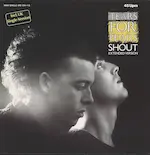
Now let's go primal and Shout. Not Isley Brothers-style, but Tears For Fears-style. Tears For Fears consists of singer and lead guitarist, Roland Orzabal, and bassist and secondary vocalist, Curt Smith. They debuted in 1983 with songs loosely centering around suffering trauma, was naturally followed up by Song in the Big Chair, having a loose theme of therapy. And yes, the six-minute single Shout alludes to primal scream therapy."Shout, shout. Let it all out. These are the things I can do without. Come on, I'm talking to you."
On a deeper level, Shout may also be about expressing oneself and being heard, through political protest or other means. Regadring the music, the ominous baseline is catchy. The surrounding synths veer toward early Depeche Mode in spots, which works for me. The lead guitar in the outro provides good contrast from the synths. The guest drummer and producer, Chris Hughes, know a thing or two about drumming from his days in Adam and the Ants. Orzabal has a resonating, powerful voice, which adds well to the instrumentation without drowning it out.
The video for Shout has the band performing in a picturesque but isolated landscape. Halfway through however, they're migrate to the studio and are soon joined by song by a growing crowd. The duo look pained in the first half when by themselves, but their moods brighten when they're joined by the crowd, almost as if singing the song (letting it out) in company was therapy. It's a powerful, mobilizing, and ultimately uplifting video. Shout topped the US charts and almost did it in the UK too. The followup single Everybody Wants To Rule The World was an even larger behemoth. Tears for Fears didn't release another album until 1989, losing some momentum. After an acrimonious breakup at the turn of the '90s, the duo buried the hatchet and now record and tour.
Walking On Sunshine (Katrina and the Waves)
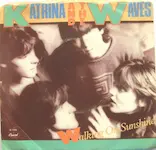
Fourth on our list is Walking On Sunshine by Katrina and The Waves. The band is reminiscent of the Go-Gos, with their punkish new wave energy comboed with retro vibe. Originally a ballad released on their debut album in 1983, Walking On Sunshine was re-recorded and released as a single two years later, walking its way to a top-10 showing both sides of the pond.
The fast drum intro sets the tone for the rest of the song nicely. Indeed, Walking On Sunshine is vigorous in all aspects. Katrina's vocal enthusiasm is infectious and catches you right away, in particular in singing the song title and the oldies-tinged "woah"s.
"And I'm walking on sunshine, woah-oh. I'm walking on sunshine, woah-oh."
The guitar at the end of each line drives the song further and further. The theme of the song is also upbeat. The narrator loves someone and gets euphoric when he's in the area. Indeed, she says, "'Cause I just can't wait till you write me you're coming around." Later on, she proudly proclaims, "I feel the love that's really real".
There is a possibility that the narrator is in denial and the love is unrequited, but let's go with the cigar-is-just-a-cigar angle on this one. The video has Katrina dancing around parts of London, interspersed with shots of the band performing. Ironically, the video was recorded on a cloudy day in sometimes stark-looking parts of town. Perhaps this was intentional - did Katrina look and feel like she was walking on sunshine despiteher surroundings? Unfortunately, Katrina and the Waves were a one-hit wonder, unable make sunshine strike twice. The band's last album was in 1997, but Katrina solo is still out there touring.
Available in the Vault
Things Can Only Get Better (Howard Jones)
Let's end on a high note with Things Can Only Get Better by Howard Jones. Synth wizard Jones debuted in 1984 with a shimmering batch of synth pop, with little guitar to be found. He quickly followed it up with Dream Into Action, which contained his largest hit up to that point in Things Can Only Get Better.
The uncertain synth in the beginning is a good counterpoint to the rest of this upbeat song, and matches Jones goal to show that things will improve. The song is straightforward, as it's a call to keep on moving forward (a non-ironic cousin of Whip It?), regardless success or failure. Like a lot of Jones's other work, it's a song chock full of positivity. Combined with the melody, its got serious moodlifting chops. Jones hits high notes for emphasis and does it quite well, sounding passionate and positive while maintaining his Zen vibe. The synths in Only Get Better are quite catchy, with omnipresent horns adding spice; you may not miss the guitar after all.
The video for Things Can Only Get Better has Jones and stage crew preparing for a performance. Jones appears nervous, but practices what he preaches: he doesn't stop and falter. In line with quirky new wave videos, Charlie Chaplin stumbles upon Jones's dressing room and they talk (how about that for a lifeline?). Then it's showtime, and Jones performs enthusiastically, decked out in orange. His live show looked like a lot of fun. Things Can Only Get Better was a top-10 in his native UK but its popularity also managed to cross over to the US. Jones had a big hit the following year with No One Is To Blame, and had more hits into the early '90s. He still occasionally makes new albums and tours. In fact, I'll be seeing him live in less than two short weeks.
Outro
That's a wrap for 1985, and also for this episode. I'm your host, Jason D'Orazio, wishing you a great week. We'll talk in seven short ones!
A new one every month.
($8/month USD) Secure checkout with Gumroad

Just Released on Synth and Swagger:
Album Deepdive: Falco 3Pop-Up Video Commentary: Howard Jones' Things Can Only Get Better