



Intro
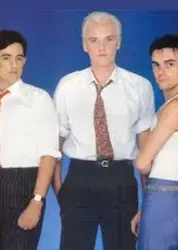
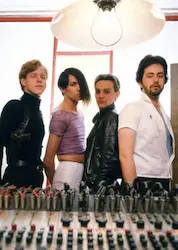
Some casual Human League and new wave fans are not aware that they had two albums before their breakout Dare. These had a much different sound - with longer synth notes akin to Kraftwerk, and often times more ominous. Then the band split into two: Human League Mark II and Heaven 17. Both developed a more accessible sound, but their paths couldn’t be more different. And even stranger is that a single track is the fork in the road.
In hindsight, I Don't Depend On You sounds less like an experiment and more like a blueprint.
Human League Mark I
The Human League were inspired heavily by Kraftwerk, with their atmospheric synths. Take the single Empire State Human - its synth riffs could be put in a Kraftwerk song without anyone crying foul. The League often twisted their synths to make them more ominous or dadaist. For example, Circus of Death appropriately has a twisted carnival vibe. Granted, Oakey layered on full vocals, but they too were robotic to match the instruments. In Empire State Human, Oakey repeats phrases like “big as a wall, wall, wall” with almost mechanical detachment, sounding more like another instrument than a traditional frontman. Meanwhile with Circus, Oakey sings with an air of resignation and later despair in response to a rampaging superhuman Steve McGarrett of Hawaii 5-0 fame (yes, sci-fi was one of the League’s go-to lyrical themes). This is all countered with one of the most deadpan spoken word sections I’ve heard in new wave.
The Human League’s sophomore album Travelogue sees their sound becoming more accessible (but nowhere near Dare and beyond). The synth notes are shortened and become distinct in tracks like Only After Dark, deviating from Kraftwerk in this regard. Oakey’s vocal range is increased a bit, evidenced in Crow and a Baby, but retain their emotionless quality.
The Human League were making groundbreaking music but it became clear after their debut single Being Boiled didn’t crack the UK top 100 they wouldn’t be profitable to Virgin Records. Under pressure to have a more accessible sound, Martyn reluctantly agreed so long as was under the pseudonym The Men…

I Don't Depend On You as an Influence
The Men's first and only single, I Don’t Depend On You is also all synths and no guitars, but the similarities end there. The intro and bassline has a bright, tremolo-laden three-note synth. Oakey sounds far more expressive than on Reproduction or Travelogue, fully inhabiting a romantic lyric. He’s pleading with his girlfriend not to dump him. Then two female vocalists in unison lower the boom on Oakey. The synths are pumped full of soul, figuratively and literally. And the song's most revealing moment arrives just before the chorus. A squirmy, funky synth riff briefly takes center stage. At the time, it feels like a curious embellishment. In retrospect, it sounds remarkably like the kind of synth-driven groove that Ware and Marsh would later make central to Heaven 17.
In hindsight, I Don't Depend On You sounds less like an experiment and more like a blueprint.
Heaven 17
After they quit the Human League, Marsh and Ware were ready to record with their own vision, quickly tapping Glenn Gregory for vocals. In a risky but bold move respecting their vision, they also decided not to tour to focus more on their music. They had a love for soul music, as evidenced by the funk flourishes of I Don’t Depend On You. But Heaven 17 didn't merely retain the soul influences hinted at there. They expanded them. The funky synth figure that briefly appears before Depend’s chorus becomes the foundation of tracks like Fascist Groove Thang and Crushed By The Wheels of Industry, where the groove is no longer an accent but the main attraction. And these songs also borrow Depend’s disco leanings (albeit updated for the early ‘80s) with consistent, fast-paced drum machines. This gives many Heaven 17 songs solid danceability. That being said, the album Penthouse and Pavement carries over some of the angular synths and tense rhythms found in the League’s Travelogue.
The Luxury Gap continued Heaven 17’s evolution, in part by smoothing many of Heaven 17's sharper edges. Where Penthouse and Pavement often felt tense and angular (“Fascist start in motion”), songs like Temptation and Let Me Go sound warmer and more inviting (“Make me an offer that cannot be ignored”). The grooves remain central, but now serve songs that are less confrontational and more emotional. For example, doubling down on soul with tracks like Temptation. While Fascist Groove Thang had R&B elements to it, Temptation is a more complete integration, with the chorus carried by a female vocalist with full Tina Turner-esque soul dynamics (which I learned the hard way at karaoke). Let Me Go illustrates the other Luxury Gap change: increased accessibility. In it, Gregory shifts to a more dynamic vocal. He sounds convincing in his plea to his girlfriend to end their relationship. And Let Me Go also shows a shift to more conventional themes (a romantic breakup). Just as Oakey became a more expressive singer in Human League Mark II, Gregory became increasingly comfortable inhabiting soul-inflected material.
If Human League Mark II emphasized melody and personality, Heaven 17 emphasized groove and sophistication.
⇩ Heaven 17 Song Commentaries
Human League Mark II
A friend once told me she loved early Human League but lamented that “the girls got involved”. While that assessment is unfair to Sulley and Catherall, it captures a reality many fans noticed: Human League Mark II was not a refinement of Mark I so much as a reinvention. While Heaven 17 methodically pursued their vision, Oakey’s path was far more chaotic. Suddenly without a band and facing an upcoming tour, he recruited two teenagers, Joanne Catherall and Susan Ann Sulley, after liking their dance moves in a nightclub. By every logical measure, this should have been a disaster.
Instead, Human League Mark II became more accessible without abandoning the electronic foundation of Mark I. Songs like The Sound of the Crowd and Love Action traded some of the earlier band’s austerity for stronger hooks, brighter melodies, and a greater emphasis on personality, inspired by I Don’t Depend On You. Their synths became punchier and more melodic, resembling contemporar y synthpop more than Kraftwerk’s atmospheric electronics. Lyrically the League even sprinkled in a couple love songs and espoused some optimism in The Things That Dreams Are Made Of. Their doubled-barreled female vocals are a Depend trademark, along with Oakey singing with the range and cadence of contemporary new wave bands (albeit still with his detachment). This means more full singing and less chants and spoken-word sections. Even so, success was hardly guaranteed. Regarding Sulley and Catherall’s vocals, an executive literally said “Get them off that record”. And the band’s early singles were primarily successful in the UK but not beyond.
Then came Don't You Want Me, which showed the League’s shift the most. Oakey reportedly viewed this album closer as filler and resisted releasing it as a single. Yet the song’s rapid-fire intro, conversational duet and cinematic storytelling proved irresistible, turning a fourth single into a chart-topping hit in both the UK and the US.
Dare was not the end of Human League Mark II’s evolution. With their follow-up single Fascination, they explored their dance inclinations deeper, even gaining favor with the R&B fan base. Adam Ant cautionary tale Mirror Man showed stylistic experimentation, having a Motown flair to it. With 1984’s The Lebanon, they even incorporate crunchy guitar flair courtesy of the Rezillo’s Jo Callis.
⇩ Human League Song Commentaries Available in the Vault
Outro
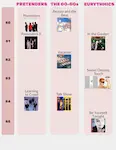
Viewed in hindsight, I Don’t Depend On You feels less like an odd detour and more like a roadmap. Heaven 17 inherited its groove, soul influences, and danceability. Human League Mark II inherited its accessibility, melodic instincts, and vocal interplay. The split may have ended one of new wave’s most fascinating early bands, but it also created two of synthpop’s most successful ones. Remarkably, the blueprint for both was hiding in plain sight all along.
A new one every month.
($8/month USD) Secure checkout with Gumroad

This Week on Synth and Swagger:
Just Released: Best New Wave Songs of 1987Friday: Playlist of the Week