




Intro
A-Ha boasts the most-watched new wave music video with Take On Me, logging over two billion Youtube views. I’d also argue they’re a new wave bookend. In fact, you can witness new wave’s whole evolution by juxtaposing Take On Me with Talking Heads' Psycho Killer from eight years prior. When A-Ha released their debut album Hunting High and Low, new wave soon reached a crossroads with Live Aid. After it, new wave artists scrambled to reinvent themselves. For example, the Police's Sting and Ridgway from Wall of Voodoo went solo and leaned heavily on jazz and Western stylings. This served to stop the flow of new wave debuts. Only a year later, there are solid band debuts that drew on new wave's arsenal, but are a style all their own. For instance, half of Erasure was Depeche Mode and Yaz veteran Vince Clarke, but he adapted his signature synths to the late ‘80s by making them dancier. And the Pet Shop Boys delivered new wavish melodies and irony in spades, but had stronger club inclinations.
"You’ll End Up Crying also stands out; listening to its cinematic flair has me imagining Bond dismissing a romantic advance from one of his Girls near movie’s end."
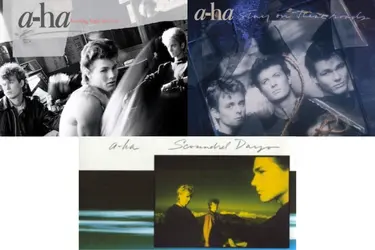
Hunting High and Low
A-Ha member Morten Harket is the culmination of new wave vocalists offering less sneer and more vulnerability, presaged a year with Howard Jones and Alphaville's Marian Gold. This is totally in line with their native Scandinavian culture of warmness with restraint. This ethos is also reflected in the synths and drums, which, unlike early synthpop, are temperature-cold without being emotionally-cold.
Of course, Hunting High and Low had the monster hit Take On Me. As heavily-played as it still is, it’s a new wave masterpiece. But it’s also a great intro to the band, introducing their synths as bright as the midnight sun. Also, Harket’s disarming, half-conversational vocal style, punctuated at the right moments by high drama (take Harket’s multi-octave chorus that will shatter many a karaoke performance). But that’s just one of several earworms on the album. More on Take on Me in our best-of-1985 article.
Another highlight is Train of Thought, which hooks you with nervous energy rather than romance. True to its title, it has a fast-paced synth that melds nicely with its stream-of-consciousness lyrics. And the flute in the intro nicely complements their bright sound. With its slightly unsettling sonics, it’s a great bridge to their next album…
And of course the title track, a minor hit in its own right, has A-Ha delivering a tender ballad in their own style. A-Ha delivers a restrained, cozy vignette of yearning and intimacy. Reflecting the rest of the album, the song Hunting High and Low has mellow instrumentation and Harket’s vocals are mostly relaxed.
In all, A-Ha resists excess. The arrangements rarely crowd Harket’s voice, and emotional peaks are earned rather than piled on. This restraint gives the album longevity; it feels composed rather than impulsive, confident rather than eager to prove itself. Hunting High and Low is a solid debut album that projects confidence through clarity.
 Preview A-Ha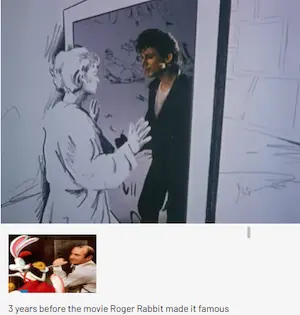
Scoundrel Days
A-Ha’s sophomore effort came out the following year, dubbed Scoundrel Days. The album begins with the ominous synth riff intro of the title track. This is done to tell the listener immediately that this is A-Ha 2.0, rather than a rehash of Hunting High and Low. It’s done effectively, evading the sophomore slump that Cyndi Lauper succumbed to that same year. Yes, the title track and others on Scoundrel Days are darker and edgier. For instance, Cry Wolf transports you to the, em, Norwegian woods, with Harket injecting new grit. For instance, hear the crunchiness of his delivery of “can’t give up” and his anxious “ooo-ooo” after the title. The synths are still bright but add tense anticipation and a Halloween vibe, like you’re in the woods afraid to run into this wolf.
But this darkness has an end, just like mørketid, as such moments like in Cry Wolf are balanced nicely. Maybe Maybe is a pleasant sugar-rush, mirroring Lauper’s Maybe He’ll Know in both theme and sonics (they’re only three weeks apart in release). And finally, We’re Looking For the Whales, which is basically the plot of the environmental-tinged Star Trek 4 two months later. Well, A-Ha had soundtrack aspirations…
A-Ha’s tentpole ballad for Scoundrel Days is Manhattan Skyline and it’s a microcosm of the tonal shift between their first two albums. While the song Hunting High and Low is about post-breakup lament, Manhattan Skyline deposits you right in the middle of the breakup. Because of that, Harket’s vocals are his most intense and damning yet, with lyrics to match (e.g. “I don’t want to race this pain, I’ll never see your face again”). The synths take sudden turns in tone and volume to mirror the volatility of the situation.
Scoundrel Days is a great expansion of A-Ha’s sound that imposes tension and control on the listener.
Preview A-HaStay on These Roads
A-Ha, on the heels of Duran Duran's A View to a Kill, did the theme song for the James Bond movie The Living Daylights. They parlayed its cinematic flair in their next album, Stay on These Roads. Blood That Moves the Body is the chief example, with its visceral metaphors and dynamic, orchestral string-synths. This is all buttressed by dramatic vocals from Harket. The album closer You’ll End Up Crying also stands out; listening to its cinematic flair has me imagining Bond dismissing a romantic advance from one of his Girls near movie’s end. Tracks like Blood and Crying show A-ha completing their transformation from pop outsiders to cinematic professionals.
And while singles like You Are the One and Touchy trade the orchestral for late ‘80s pop riffs, they maintain the larger-than-life feel learned from The Living Daylights. Importantly, these singles don’t undercut the album’s cinematic ambition. The hooks are cleaner, the tempos tighter, but the sense of scale remains intact, suggesting a band learning how to communicate grandeur within the constraints of the late-’80s pop landscape.
The closest analogue ballad to Hunting High and Low and Manhattan Skyline has to be the title track. Stay on These Roads finds a good middle ground in intensity between Hunting and Skyline. But more importantly, it has the cinematic flair A-Ha was going for. In fact, I don’t think it would be out of place near the end of a John Hughes movie. There’s an air of resignation in the song, that Harket and his love are distant from each other but they have to keep on moving (Matthew Wilder was right!).
Stay on These Roads has A-Ha effectively scaling up their sound without teetering into bombast.
Preview A-HaAvailable in the Vault
Outro
A-Ha’s career didn’t end with the ’90s - they continued to create, perform, and evolve, from the adult-contemporary turn of East of the Sun, West of the Moon to the melancholy lushness of Summer Moved On, and even with tracks like Celice and Bandstand, which was a response to the mid-2000s new wave revival.
But their lasting significance lies earlier. Where ABBA perfected pop hooks and harmonies, A-Ha offered a truer sonic reflection of Scandinavian temperament—cool surfaces, emotional discipline, and atmosphere over excess. In doing so, they didn’t just close the new wave era; they showed how it could mature, leaving the door open for bands like the Cardigans to step through in their own, quieter way.
A new one every month.
($8/month USD) Secure checkout with Gumroad

This Week on Synth and Swagger:
Artist Spotlight: Do the Bangles JangleOceania New Wave Song Commentaries (3 free, 6 vault)
Coming Thursday - New Wave Quick Hit