



Intro
Some new wave tracks are catchy, some are cool, and some make you wonder if the studio air vents were pumping out something stronger than oxygen. In this roundup of the genre’s greatest headscratchers, we revisit moments when big-name bands took a sharp left turn - into opera-rap, pirate-rap, crying guitars, and mother issues. You’ll laugh, you’ll cringe, and you might even add a few to your playlist… just to prove you survived the ’80s.
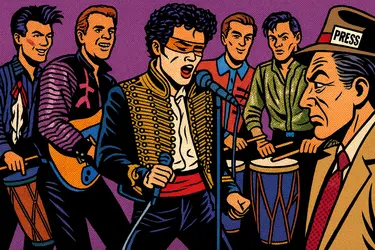
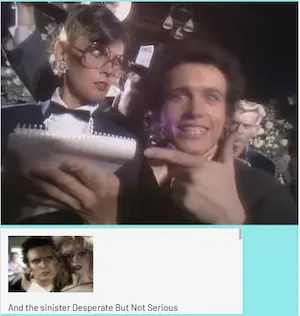
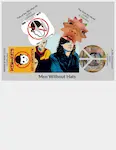
"The highlights of Ant Rap are Adam dressed as an American football player dodging record executives to score a touchdown, and him using magic to turn the head executive into a pig"
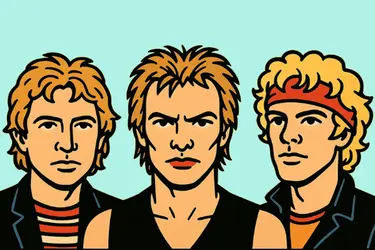
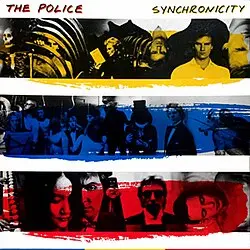
The Police - Mother
Hands-down the biggest headscratcher in new wave is the Copeland-written Mother by the Police. In the late ‘70s and early 80s they were hitmaking juggernauts. The slyly deceptive Every Breath You Take was the lead single for Synchronicity (Sting even plays cello in the video). I can only imagine fans’ shock when they heard Mother early in the album a month later (I was pretty confused when I bought the album in college in the late ‘90s). And the rest of the album (except Synchronicity II) is a mellow swan-song for the Police that often sounded like a warmup for Sting’s solo career. Mother's twisted-sounding Middle Eastern-style instrumentation, along with Copeland’s deranged spoken-word (actually, screaming-word) vocals already make it bizarre. But the lyrics to Mother add fuel to the fire in channeling Norman Bates. Copeland is begging her mom to stop calling and smothering her. He also laments “Every girl I go out with becomes my mother in the end“. Disturbing. Although Mother is Copeland’s composition on a Sting-heavy album, there’s no clear record of it being a peace gesture. Still, its placement among Sting’s songs may have been a rare allowance for Stewart’s creative voice to emerge amid the tension.

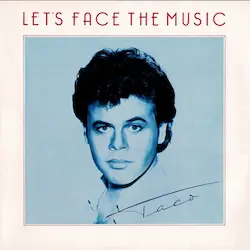
Taco - Opera Rap
On his 1983 debut After Eight, Dutch-based Taco had a global hit with his glossy, tongue-in-cheek remake of Puttin' on the Ritz.” The rest of the album stuck close to that formula: a mix of ’30s-style remakes and originals that sounded so faithful to the era that I assumed the title track was a cover… until I heard references to “color TV” and “tacos.”
For his third album, Taco clearly wanted to show he could color outside the lines. Enter Opera-Rap. True to the title, Taco (like a Dutch Falco on a whim) raps his way through the verses - serviceable, if not groundbreaking - before pivoting sharply into grand operatic choruses. These feature excerpts from Bizet’s opera Carmen (Toreador) and other recognizable arias, delivered with surprising vocal authority. The man can actually sing.
Musically, the track is a stylistic collision: stiff marching rhythms underpin the rap, while ’30s-style synth flourishes — possibly even a cheeky Rhapsody in Blue nod - burst in like time travelers from After Eight. The transitions are jarring, but that’s part of the appeal. It’s an ambitious, slightly unhinged genre mashup that earns Taco points for sheer nerve, even if you leave wondering: “Why does this exist… and why am I kind of enjoying it?”
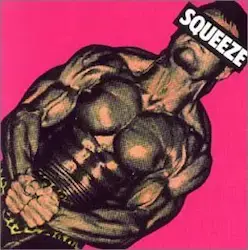
Squeeze - Wild Sewerage Tickles Brazil
In college I picked up Squeeze's 1982 compilation Singles 45 and Under, which was a perfect crash course in their witty, melodic early sound. Then I stumbled on the Squeeze A&M Classics compilation, spotted some unheard tracks, and snapped it up. It started strong... then halfway through came Wild Sewerage Tickles Brazil. Suddenly, the hooky pop was replaced by a sprawling, progressive-rock instrumental. Wah-wah drenched, Hendrix-style guitar solos wail over pounding drums, while random bursts of screaming and crying drift in and out like ghostly interjections.
What happened??
The answer lies in the band’s chaotic debut era. At the time, Squeeze had a McCartney-esque sensibility, with Chris Difford’s lyric-writing and Glenn Tilbrook’s melodic instincts meshing beautifully. Hoping to elevate their profile, they recruited one of their heroes, Velvet Underground’s John Cale, to produce their first album. But Cale had other ideas - he tossed out much of their original material and insisted they write a fresh set of songs. Sewerage sounds like the product of that uneasy collaboration, perhaps an attempt to indulge Cale’s avant-garde tendencies while still proving they could play.
Ultimately, the band reclaimed control, recording Take Me I’m Yours and slipping it in their debut - the song that would anchor it and point toward their true sound.
⇩ Squeeze Song Commentaries

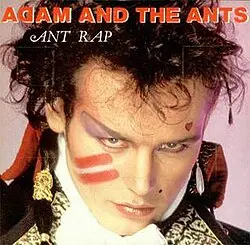
Adam and the Ants - Ant Rap
Yes, this makes two rap tracks - and no, the ’80s weren’t ready for either. The embracing of rap in Blondie's Rapture encouraged hip-hop musicians that they can score hits too. But it also brought out new wave artists who wanted to do a novelty rap song. Now Adam and the Ants had composed Native-American style chants (Human Beings) and pirate shanties (Jolly Roger), and the following year decided to release (what else?) Ant Rap. The intro sets the chaotic tone: Ant delivers a decent rap line that descends into his signature scream. And the lyrics (the band bragging about their music and themselves) is actually common ground between Ants (like Ant Music) and golden-age rap tracks like Whodini's Magic Wand (written and played by Thomas Dolby).
I also need to mention the video for Ant Rap. Adam Ant is a knight (for King Arthur?) trying to save a damsel in distress. But the highlights are Adam dressed as an American football player dodging record executives to score a touchdown, and Adam Ant using magic to turn the head executive into a pig. Out of the six songs featured here, Ant Rap was the only hit: in fact it charted better in the UK than Rapture (#3 vs #5)! Antmania was the real deal.
Available in the Vault ⇩ Adam Ant Song Commentaries
Eurythmics - You Take Some Lentils and Some Rice
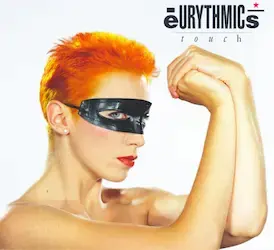
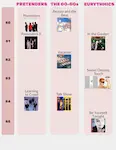
By 1983, Eurythmics were unstoppable - Sweet Dreams had turned them from cult curiosities into global stars, and they followed it up the same year with Touch, an album as sharp as it was experimental. Touch’s lead single, Who’s That Girl?, is all cold precision: Annie Lennox’s rich, accusatory vocals set against Dave Stewart’s icily layered synths. It’s tense, moody, and quintessentially Eurythmics.
Flip that single over, though, and you tumble down a rabbit hole into You Take Some Lentils and Some Rice, one of the oddest detours in their catalog. The spotlight here is firmly on Stewart, whose synth textures feel like they’re deliberately misbehaving - warbling, detuning, and sputtering like they’re on the verge of short-circuiting. Lennox, rather than soaring over the top, offers understated, almost ghostly vocal fragments, more like a murmur in the background than a lead performance.
The result is part musique concrète, part private in-joke, and part sonic prank - a far cry from their still-forming early work after leaving the Tourists, and far too strange to ever grace a chart. Lentils feels less like a B-side filler and more like a window into the duo’s delight in dismantling their own pop machinery.
⇩ Eurythmics Song Commentaries
Devo - Speed Racer
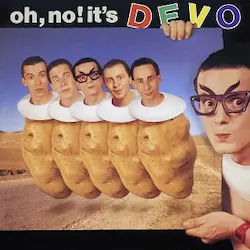
Weirdness was Devo's default setting, but Speed Racer pushes even their eccentric standards into overdrive. Originally tucked away on 1982’s Oh, No! It’s Devo, the track abandons the usual verse-chorus-verse framework entirely. Instead, it’s a series of rapid-fire character sketches, all voiced by Mark Mothersbaugh - who channels the titular Japanese cartoon hero, a shifty, money-grubbing doctor, a lecherous Barbie Doll, and a menacing pirate. Each character offers only surface-level introductions, like a roll call at the world’s oddest job interview.
Musically, the track is classic early-’80s Devo: antiseptic, hyper-precise synths clicking and whirring like factory machinery, with tight drum programming driving the absurd narrative forward. The comedy peaks when Mothersbaugh slips into Barbie’s breathy delivery, equal parts flirty and unsettling.
But Speed Racer isn’t pure silliness - it’s also a sly parody of consumer culture and mass-market entertainment. As the scenes unfold, the doctor’s greedy nature becomes clear, culminating in the gleefully sinister “Doctors kill... so here’s your bill” line. It’s a reminder that in Devo’s dystopian worldview, everyone - from cartoon idols to plastic dolls - is trapped in the same cycle of exploitation and transaction.
It’s bizarre, funny, and strangely cohesive — a miniature concept piece disguised as a novelty track.
⇩ Devo Song Commentaries Available in the Vault
Outro
New wave gave us timeless synth hooks and unforgettable style, but it also gave us these gloriously baffling curiosities. Whether they were flashes of genius or misfires depends on your tolerance for the strange. Love them or hate them, they prove the ’80s music scene wasn’t afraid to experiment - sometimes wildly. Got your own favorite “what were they thinking?” track? Drop it in the comments. Who knows - it might make the next list.