



Intro
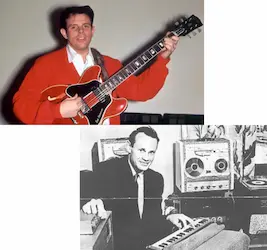
Sure, Napster got me hooked on new wave music. But I also tried out a lot of oldies (pre-Beatles rock) music. I latched onto many mega-hit songs by such artists. But my favorite was Del Shannon. He was great at spinning a clever narrative and selling it to you vocally. With dark themes, he would totally go there. And of course, the things he and Max Crook could do with the Musitron synth. Then it dawned on me: Del Shannon is a sort of proto-new waver, and shares eerie similarities with Depeche Mode (cardigans and vests aside). Let me show you how - besides the fact that we didn’t see them in the same room together.
Pioneering Use of Synths and Minor Chords
Del Shannon and later Depeche Mode turned heartbreak and despair into circuitry, using sonic machinery to sell you on their songs.
Almost a decade before KraftwerkKraftwerk started out, Del Shannon incorporated the now-primitive Musitron synth into a lot of his early work, the most famous being the bridge in the worldwide #1 Runaway. As the public was unfamiliar with the sound of a synth (unless you dug ‘50s B-movies), the hook was guaranteed to be memorable. Del Shannon’s collague, Max Crook, in a DIY tour-de-force that would make Elvis Costello blush, made the Musitron by tweaking an early synth called the clavioline, and paired with a homemade oscillator for a unique, futuristic sound. In Runaway and other early work, the Musitron was more than a new toy (sorry Lene!) - it was an integral part of Del Shannon’s emotional arsenal.
Also important is Del Shannon’s use of minor chords, a staple of new wave music. They were used to amplify Del Shannon’s angst in the songs. For instance, Shannon’s Cry Myself to Sleep used a falling minor chord progression (most clearly in the verses), making heartbreak sound cinematic, a harmonic move Depeche Mode would later perfect with electronics instead of strings.

Now Depeche Mode came after Kraftwerk and early synthpop, but used the existing synths in novel ways. A good example is in the proto-industrial synths of Everything Counts and Master and Servant. In the latter, the synth beats sound like something coming from factory machinery, capped by quick hammer-synths standing in for S&M activity.
Dark Themes in Music
Del Shannon’s work was darker than most of his early ‘60s contemporaries. Stranger in Town is worth noting - Del Shannon and his girlfriend are evading a bounty hunter hired by her dad with the gusto of Natasha Lyonne’s character in Poker Face. The lyrics are simple but vivid with lines like “he follows me to every town” and “I’m just afraid they’ll hurt my baby”. And maybe it’s a stretch but the chorus’ intense repetition remind me of the proto-punk of Velvet Underground.
Even Del Shannon’s lighter work is not simplistic. Hats Off to Larry is not your typical oldies song - Del Shannon is gloating over his ex getting dumped herself (karma?). And he even layers in a sympathetic aside with the line “I know this may sound strange - I want you back, I think you’ll change” before returning to his gloatfest.
And once Depeche's Martin Gore honed his songwriting chops, he wrote about demons better than most new wavers. Blasphemous Rumours is a great early example that foreshadowed Gore’s Jedi-level songwriting that we all know and love. In the song, Gahan is questioning God’s benevolent reputation after a just-born again young woman suffers a brutal car accident (“ending up on a life-support machine”).
Sonic Survivors
Del Shannon future-proofed himself a bit by using minor chords: the Beatles’ later embrace of them in 1963 was one of the reasons they quickly relegated many prior rockers (including Elvis Presley) to the discount rack. But Del Shannon’s sound co-existed well with the British Invasion (with an occasional synth solo to keep things interesting). Thus he still scored hits a couple years into Beatlemania, finally yielding when psychedelic textures took over in the late ‘60s.
Case in point: Del Shannon’s Keep Searchin’, released late in 1964 (over a year after Beatlemania started). It’s a defiant minor key rocker that didn’t sound dated, and its cinematic energy and restless rhythm sound like someone striving for relevance. And an organ solo replaces the usual Musitron solo to reflect this.
Depeche Mode were also sonic survivors: The synthpop wing of new wave got hit even harder when the sludgy sound of grunge flourished in the early ‘90s. But where artists like the Human League and Howard Jones stumbled, Depeche Mode’s dark personal themes were congruous with ‘90s alternative, their metallic synths and beats made them friendly to industrial music fans, and they were willing to diversify their sounds through twangy guitars (Personal Jesus) and gospel choruses (Condemnation). As a result they strongly bucked the trend of synthpop bands getting shunned.
Even their more contemplative work showed that flexibility. For instance, Enjoy the Silence turned introspection into atmosphere, layering melancholy lyrics over sleek, evolving production. It proved Depeche Mode could translate their darkness into something universal - a song equally at home in synthpop clubs, alternative-rock mixtapes, and, eventually, the musical canon itself.
Mental Health / Substance Issues
Both Del Shannon and Depeche Mode lived inside the melancholia they recorded. While Shannon’s pain seeped between the grooves, Gahan and Gore turned theirs into performance therapy.
Del Shannon wrote about depression (albeit in a lighter context) in much of his work. Indeed he came right out of the gate in the first track in his debut album with Misery. It references him brooding at home and spiraling because his ex found a new guy.
Del Shannon took his fading stardom in the late '60s hard, suffering depression and leaning hard on alcohol in the ‘70s. But he cleaned up, and with the help of Tom Petty and Jeff Lynne (of ELO), he made a bit of a comeback. They wanted him to replace the deceased Roy Orbison in the Traveling Wilburys, but unfortunately Del Shannon committed suicide soon after.
In 1993’s Walking in My Shoes, Gahan is driving home that his pain is unique. And 1997’s Barrel of a Gun is a master class in wallowing in regret, with Gore comparing his second guessing with facing imminent murder. Of course, Depeche Mode had their own demons - Martin Gore attempted suicide in the mid-90s. And David Gahan also abused alcohol and street drugs to the point of a near-fatal overdose around that time. But they dodged those bullets and released Ultra in 1997, followed by many more to this day.
Available in the Vault ⇩ Spoons Song Commentaries

Outro
Both found salvation, briefly, in circuitry. For Shannon, it was the Musitron’s cry; for Depeche Mode, the digital drone that could carry their pain safely outside themselves. The difference was timing: by the 1990s, the world finally understood how to dance to despair. What once sounded alien had become emotional language. Every synthesizer since still hums with that lesson—that electricity can break hearts as easily as it powers them.
Jason's Commentaries
A new one every month.
($8/month USD) Secure checkout with Gumroad

This Week on Synth and Swagger:
Artist Spotlight: Do the Bangles JangleOceania New Wave Song Commentaries (3 free, 6 vault)
Coming Thursday - New Wave Quick Hit