


Intro
In Headscratchers Part 1, we looked at new wave songs that made you stop and ask: wait… what was that? Not because they were bad, but because they felt just a little off. This time, we’re going deeper. These tracks don’t just bend expectations - they ignore them entirely. From genre detours to theatrical excess, each one shows a different way new wave artists stepped outside their lane… and left listeners trying to make sense of it.
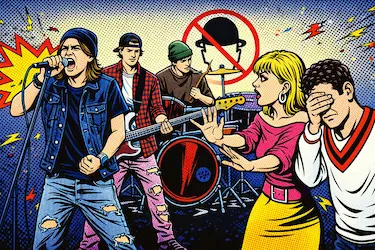
"You Killed the Clown would actually be less disturbing if the Sex Pistols did it"
The Absurd One (B-52s - Big Bird)
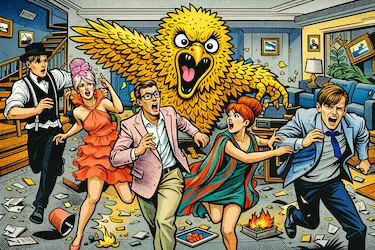
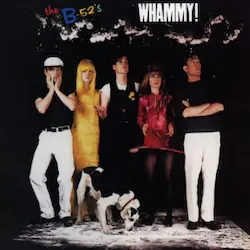
With their third effort Whammy!, the B-52s mechanized and tightened their sound - most tracks had a similar drum machine beat. They also brought their themes closer to Earth. Whereas before they visited alien planets and had their car hijacked by the Devil, Whammy! had them counterfeiting and looking for romantic partners. Not Big Bird, which details their futile attempts at dealing with this berserk bird. Even for a band built on kitsch and absurdity, Big Bird feels like a curveball. Fred’s vocals are anxious, totally in his comfort zone. But they’re also clipped, adding to the urgency of chasing this rogue bird away. Cindy and Kate sing at different registers, adding further dynamism, before joining for a frantic chorus. The sonics are also out-there for the B-52s, borrowing from ska and even hinting at Oingo Boingo-style horn blasts. Finally, the bird itself has a few disturbing squawks, making it easy to imagine it running rampant in the B-52s’ house.
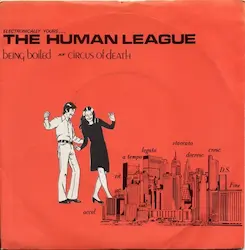
The Dystopian Experiment (Human League - Circus of Death)
Early Human League threw listeners some curveballs. I Don’t Depend on You sounds eerily like later Human League, and the ominous-sounding Black Hit of Space, belying a tongue-in-cheek critique of pop music.
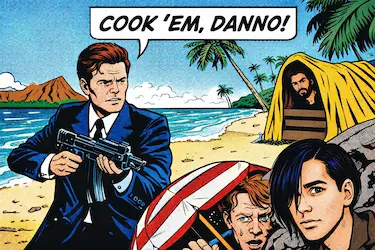
But Circus of Death is the most arresting. In it, Oakey gives a 20-second explanation of the song sans music, giving it a short-story feel. The League then transforms Hawaii Five-O’s by-the-book police chief (Steve McGarrett) into a bloodthirsty supervillain, made strong and crazy by a serum reminiscent of the Goblin formula from Spider-Man. Oakey then transitions to a pleading, shaky voice, begging McGarrett to spare him and his family. The melody, in line with the song title, resembles twisted carnival music. The synths are a slowed-down version of the ‘50s synths used mostly in sci-fi and horror B-movies, adding to the song’s tension. This kind of theatrical setup was miles away from the polished synth-pop the band would later become known for. There’s no hook to grab onto - just atmosphere, tension, and a narrative that keeps spiraling.
You can’t hum this one, but you can sure experience it.

⇩ Human League Song Commentaries
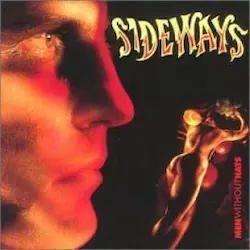
The Identity Crisis (Men Without Hats - Sideways)
One of Men Without Hats' trademarks were their synths: usually fast, reliable and simple. Their third album Pop Goes the World tinkers with that formula a bit, to good effect.
But with the title track and other songs on their fifth album Sideways, they sound like an straight-up alternative band with grunge (!) overtones. In fact, the intro sounds like that of alternative legend REM’s Superman. Soon, the sludgy, distorted guitars come in. Also, vocalist Ivan Doroschuk doesn’t do his usual inflection on individual syllables, and doesn’t command like previously. He sounds too much like Michael Stipe. While many new wave bands retooled their sound in the ‘90s, Men Without Hats on Sideways sounds like an entirely different band. But also, Men Without Hats weren’t just another synth band - they were defined by precision, rhythm, and Ivan’s unmistakable phrasing. Strip those away, and what’s left doesn’t feel like evolution - it feels like abandonment.
It’s not a failed experiment so much as a missing identity. Fortunately they eschewed all that and updated their older sound with 2003’s No Hats Beyond This Point.
Available in the Vault ⇩ Men Without Hats Song Commentaries


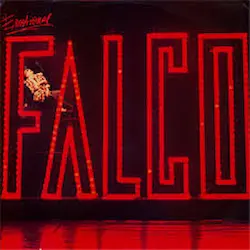
Maximalism Unleashed (Falco - Kiss of Kathleen Turner)
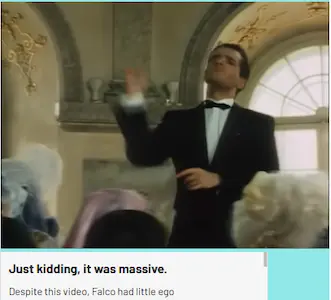
While new wave artists take pride in song efficiency, Falco goes in the opposite direction with the Kiss of Kathleen Turner, stretching its premise past the breaking point and daring you to stay on board. In fact, the 7+ minute, slow-burn, over-the-top performance sounds like a ridiculous version of Led Zeppelin’s Stairway to Heaven. The intro is a one-minute conversation aboard a train with another man. Falco is complaining about his personal issues, a sly nod to his real life. The man tries to brighten his day with a reference to Kathleen Turner, and Falco’s obsession begins.
Then everything but the kitchen sink is thrown in: faux-hair metal guitar riffs, a gospel choir declaring his love for Kathleen, and a war march like Yankee Doodle Dandy. Falco’s vocals are a tour-de-force, alternating between seductive, confident, needy and more. Falco hammed it up even more when performing Kathleen Turner on tours, with exaggerated coughs, and a gong capping off the festivities. It’s knowingly excessive, which makes it even stranger.
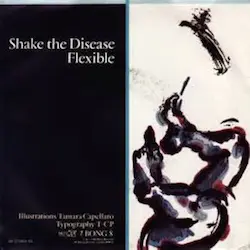
The Genre Detour (Depeche Mode - Flexible)
In 1985, Depeche Mode was busy retooling their sound, which would come to full fruition in the following year’s Black Celebration. A best-of compilation added four new tracks: The first three were their first stab at the pivotal Fly on the Windscreen, and upping the nihilism ante with It’s Called a Heart and Shake the Disease.
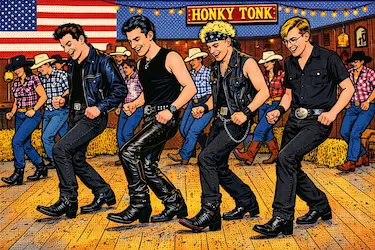
This makes the fourth entry, Flexible, quite jarring. Throughout, it’s a hoedown stomp, but instead of violins and guitars there’s the industrial-sounding beats found on People Are People and Master and Servant. Gahan follows suit with an imperative delivery (like the line “when-it’s-a-sin”). Strange as it is to say, the B-52s pull off a more convincing hoedown the following year (with Wig). Flexible is disorienting because Depeche Mode weren’t dabbling - they were actively darkening their sound, leaning into industrial textures and emotional weight. Dropping a tongue-in-cheek hoedown into that transition feels less like experimentation and more like a momentary lapse in identity.
Musically, Depeche showed up in boots, but it didn’t ruin their black celebration. And they would later redeem themselves with the country stylings of Personal Jesus and The Sweetest Condition.
Available in the Vault ⇩ Depeche Mode Song Commentaries
The Quietly Disturbing One (Thompson Twins - You Killed the Clown)
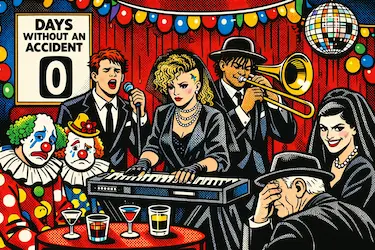
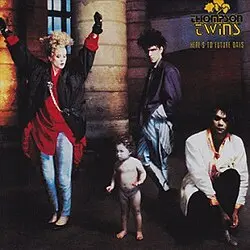
My Headscratchers entries sound jarring, either on their own, or next to the band’s usual style. But the Thompson Twins’ You Killed the Clown has the opposite problem: they lean even more heavily into their signature easy-listening sound. The arrangement to Clown is smooth and almost soothing, which only makes the lyrics more unsettling. The Thompson Twins bring up details of the charismatic clown’s murder (“you shot her down”), and suspect the motive was either spite, sport, or both. And not only does the killer have no remorse, vocalist Tom Bailey says (almost without emotion) “You laughed as she drowned. And it was the only time I ever saw you smile.” Don’t Mess With Doctor Dream was on the same album and showed the band could have a bit of edge.
In most pop songs, the kind of polish on Clown signals romance or nostalgia. But instead it acts as a disguise - softening the delivery just enough that the horror sneaks in unnoticed. In fact, this song would actually be less disturbing if the Sex Pistols sang it. And it’s this very restraint that makes it linger in our consciousness much longer.
Outro
New wave thrived on experimentation, but these songs take it a step further - into territory that’s awkward, excessive, or just plain puzzling. And that’s part of their charm. Not every strange detour works, but each one reveals something about the artist behind it. In fact, sometimes the most memorable moments are the ones that don’t quite fit. And soon, we’ll flip the script again - with songs that sound one way, but mean something else entirely.
Jason's Commentaries
MORE ARTICLES
New Wave FempowermentBest New Wave Deep Cuts ('79 to '81)Headscratchers: Weird New Wave SongsPLAYLISTS
IMAGES