



Intro
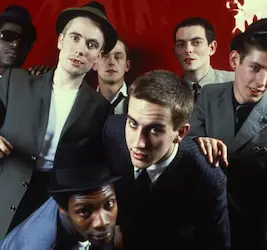
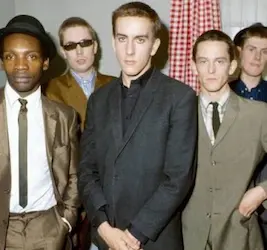
The Specials were a band three countries in the making. In the ‘50s and ‘60s, New Orleans R&B (think Fats Domino) had a dedicated following in Jamaica. Soon after, local musicians borrowed from this style but added their own flair, such as syncopating the rhythms, resulting in ska. In the late 70s Jerry Dammers formed the Specials, which combined ska with the energy and bad manners of punk music, also giving their music a British beat. A rousing success, it spurred the ska revival, with Dammers supporting such follow-up bands like Madness."Although Ghost Town wasn't written about the nationwide riots that erupted in the summer of 1981, it captured the social and economic frustrations that helped fuel them."
Self-Titled Debut
Sure, the Specials’ debut is a excellent new wave album. But it’s also the ska revival big bang, setting the blueprint for others regardless of their particular thematic angles. It also promoted unity in that it featured a racially integrated band, rare at the time. it was released through Dammers’ 2 Tone Records, which became the ska revival conduit.Gangsters
The lead single, Gangsters, immediately announces what made the Specials - and the ska revival - different. It has that distinct ska rhythm, with the guitar emphasizing the off-beats while the drums drive the backbeat. And it modernizes the snare drum, a ska staple, making it tight and economical in the spirit of punk and new wave. And the lead guitar has a surf twang to it, recalling early ‘60s surf bands like the Ventures. And Terry Hall’s vocals add to the special sauce: deadpan and emotionally detached in the British new wave tradition. Lyrically, Gangsters seems blunt, describing a environment of crime and corruption (like the TV show Untouchables) which adds to the music’s sense of urgency. But it’s also a critique of the music industry. For example, instead of bootleg whiskey, Hall asks if you are making a bootleg LP.
Play Gangsters
Specials
A Message to You, Rudy
A Message to You, Rudy is a cover of the Dandy Livingstone ska classic. Compared to Gangsters, it’s more laid back and closer to traditional ska, making it a great counterpoint. the warm, prominent horns root the song firmly in first-wave Jamaican ska. And for good reason: the Specials recruited Livingstone himself to lay them down! Hall’s vocals are a bit warmer to go along with the instrumentation. And the elongated “ah-ah” might remind listeners of Blondie's The Tide is High, which itself is a ska cover. Message to You is a straight-up warning to a juvenile delinquent to straighten up or suffer the consequences (jail). But what’s particularly apropos about it is that “Rudy” is a Jamaican term for delinquent around the time of ska which was later used in late ‘70s Britain. And just like the song itself, the term "Rudy" bridged Jamaican ska and ska revival. Also good, it increased their international stature.
Play A Message to You Rudy
Specials
Too Much Too Young
Gangsters wasn’t a fluke - the Specials’ debut had more examples of their unique sound. Case in point: their cover of the ska song Too Much Too Young. In it, Hall laments to his love interest that she has thrown away her prime years because of accidental teenage pregnancy. He expresses he still likes her. But Too Much also hits hard with social commentary, critiquing policies on child care (“burden on the welfare state”) and sexism (“now you’re chained to the cooker”). As for instrumentation, the ska elements of snare drums and syncopation are present (albeit relaxed and slower). Even with his punkish vitriol (including the tight loop of the outro), Hall retains Jamaican expressions like "pickni" ("child"), reinforcing the band's commitment to honoring ska's roots.
Play Too Much Too Young
Specials
More Specials & Beyond
More Specials is not the most creative name for a sophomore album, and it belies the fact that it’s an excellent expansion of the Specials’ sound, rather than more of the same. They broaden their instrumentation and bring in elements of lounge, Spanish music, and more. Some of the punk elements of their debut retreat as a result. But More Specials has more analytical writing, revealing their commentary more incrementally.Stereotype
Stereotype is an interesting lead single for More Specials in that it sounds gentler across the board: selecting Spanish acoustic guitars over punk guitars, and even Hall sounds a bit relaxed. Did the Specials, in line with other new wave bands at the turn of the 80s, start pulling their punches? Of course not. The man portrayed in Stereotype is brutish as they come: drinking to excess, beating up people, and getting in a drunk car accident. As usual with the Specials, there’s commentary behind the character study: the chorus reveals that this bravado-fueled story didn’t actually happen, but serves as a fictional stereotype. So, as in Too Much Too Young, the song challenges gender roles is a critique of the narrow view that’s encouraged of men. And sonically, Stereotype is a perfect snapshot of More Specials. Having refined their ska revival formula, the Specials never get into ruts, exploring what could be folded in organically to expand their sound. In this case, by introducing more space into the music, moving away from the relentless momentum of their debut - a technique they would use to (yes) haunting effect on Ghost Town.
Play Stereotype / Stereotype, Pt. 2
Specials
Ghost Town
And while the Hall-fronted Specials had six UK top-tens in two years, they still had a masterpiece in the tank in Ghost Town. While Madness used faux-Egyptian riffs to broadcast their nutty in Nightboat to Cairo, Ghost Town uses it to show the eerie devastation. Still, the ska elements they’re known for (rhythm section, horns) are intact. And while Hall has an element of defeat in his vocals, he still mostly retains his aloofness. And Ghost Town is willing to stretch to six minutes for the user to absorb this devastation. Excellent restraint considering their debut two years prior had many tracks clocking in at under three minutes. Although Ghost Town wasn't written about the nationwide riots that erupted in the summer of 1981, it captured the social and economic frustrations that helped fuel them. When the single climbed to #1 amid scenes of unrest across Britain, it felt less like a prediction than an uncannily timely diagnosis. In line with Ghost Town’s tone, the song feels almost like a farewell - not because it predicted the Specials’ breakup, but because it proved to be the last great statement from the original lineup.
Play Ghost Town
Specials
Available in the Vault
What Happened Next?
Soon after Ghost Town, the Specials’ infighting came to a head with Hall, Golding and Staple quitting to form Fun Boy Three (who heavily influenced a Justin Timberlake song). Meanwhile, other members of the Specials joined forces with English Beat frontman Wakeling to form General Public. Finally, Dammers carried on as the the Special AKA. Their biggest moment came with Free Nelson Mandela, a call for the South African leader's release that became both an international hit and one of the era's defining protest songs. And while the ska revival was over, the sound morphed in interesting directions.Full Circle
In the ‘90s things came full circle with the American band No Doubt channeling the Specials with syncopated rhythms. Sublime and other Americans soon followed suit, and a new, eh, wave of ska revivalists dotted the US charts, a great-grandchild of countrymate Fats Domino and the like forty years prior. While synthpop pushed new wave toward electronics and new new romanticism embraced style and glamour, the Specials proved the movement could also be socially urgent without sacrificing its dancefloor appeal. Two albums were all they needed to define Britain’s ska revival - and inspire another across the Atlantic a decade later.Like this article? The Vault has bonus writeups on five articles.
A new one every month.
($8/month USD) Secure checkout with Gumroad