


Intro
Arguably the first new wave album, Blondie's debut, is now fifty years old. And while the '90s had new wavers producing new artists, it’s really the mid-2000s that saw a new wave revival, with emboldened original new wavers then releasing their own new works. But even in the 2010s and 2020s, newer musicians have an appreciation for new wave. For instance, Dua Lipa turned Need You Tonight's iconic guitar riff into a vocal riff. But let's focus on four newer acts that draw more heavily on new wave.
Available in the Vault
Chappell Roan
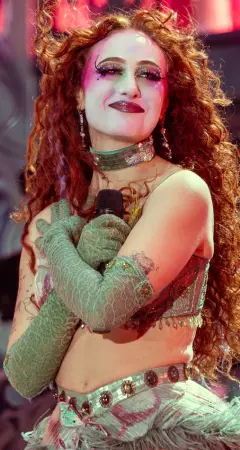
Out of the four artists I’ll mention, Chappell Roan is by far the most popular. As a child, she looked up to new wave trailblazers like Cyndi Lauper (in fact, Chappell inducted her into the Rock Hall of Fame wearing the iconic True Colors dress). And Chappell also has maximalist sheen reminiscent of revivalists like the Killers. For example, Chappell is deft with vocal hooks that she delivers in a larger-than-life fashion. And her instrumentation is dynamic but intentionally predictable. This gives her flexibility with lyrical expression (as new wavers have done). Roan goes for transparency and sometimes brutality, but with a vulnerability that connects her better with her listeners. It’s being mean without being empty. For example, her track My Kink is Karma has her gloating over the freefall of her abusive ex. In a turn of transparency that would make XTC proud, Chappell flat-out says she’s getting aroused by his reversal of fortune. New wave and its predecessors specialized in wrestling with how to handle emotional fallout: from Del Shannon's wounded schadenfreude to Howard Jones' insistence on emotional self-repair. But Chappell Roan takes a darker route - not reframing the pain, but inhabiting it, and refusing to sand down its sharpest edges. In Red Wine Supernova, Roan tones down the acid but her core feminist earnestness is still paramount. In it, she vehemently declares her desire to have a relationship with someone rather than just casual sex. So even when the bile recedes, Chappell Roan’s core remains unmistakably new wave: emotional honesty pushed to theatrical extremes, where desire, anger, and sincerity are all allowed to coexist without apology.

Yard Act
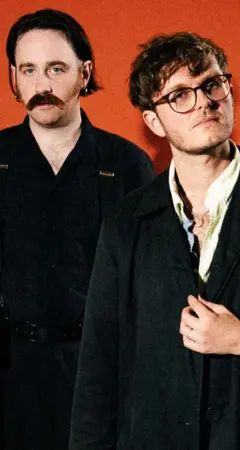
Like Chappell Roan, Yard Act specializes in lyrics that aim for the jugular while preserving vulnerability. Though with Yard, there’s more of a harsh socio-economical focus, expressed with complex lyrics. This is more in line with the Specials, XTC, or even Squeeze's Chris Difford. But their calling card is exaggerating real-life issues, such as surveillance, to almost-cartoonish extremes. With this, they’re drawing on Devo or even B-52s levels of absurdity. On the sonic side of the coin, Yard Act is a nod to post-punk with their gloomy guitars, channeling bands like Joy Division through the lens of fellow Scots Franz Ferdinand.
For example, Yard's Dark Days vividly discusses police brutality. Yard starts to paint the picture with “coppers” hiding out and polishing their truncheons, chomping at the bit to unleash them on petty criminals. The guitars and rhythm are tense and tight, imbuing a sense of dread and claustrophobia. It shares similarities to the Cure’s A Forest, with its hypnotic, looping melody that reinforce the situation is a “neverending cycle of abuse”. Even lead singer James Smith’s vocals trail off like Robert Smith himself, indicating he’s given up. But even with the scathing lyrics, there’s some vulnerability: James Smith claims he’s no angel either, willing to embrace his mistakes as he “descends into the bowels of hell”.
Magdalena Bay
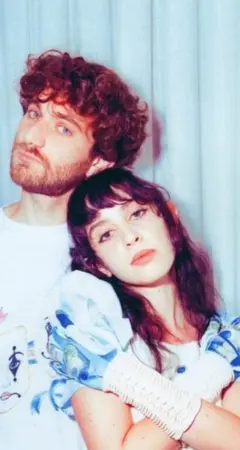
If you need a comedown from Roan and Yard Act, Magdalena Bay is a great change of pace, delivering dreamy, futuristic synthpop. This is in line with the strain of futurism prevalent to new wave (e.g. Thomas Dolby). Matthew Lewin delivers with predictable, looping synths that encourage motion. Contrast this with Yard Act’s (and post-punk’s) militaristic guitar riffs. Matthew's synths are paired nicely with Mica Tenenbaum’s wispy, ethereal vocals. For example, in Love is Everywhere, Mica sometimes holds syllables for a few seconds to bring down the temperature. Matthew’s digital effects, gated percussion, and glossy production are not window dressing - they’re used to give the listener the sense that this duo is performing the soundtrack to the Magdalena Universe.
It’s all topped off with gentle lyrics that are not fluff but rather have an ideological slant (this reminds me of Howard Jones). Some tracks, like Love is Everywhere, paint a vivid picture of a future, communal utopia, with ubiquitous love and respect, and a “hive-mind”. Others, like Image, delve into sci-fi, as Mica asks that her lover recreate her in his image. Nevertheless, it’s all kept light hearted with shimmering synth arpeggios and earnest vocals. And I dig that Magdalena straddles the line between this communal futurism feeling comforting and slightly unsettling, making them more memorable after listening.
Nation of Language
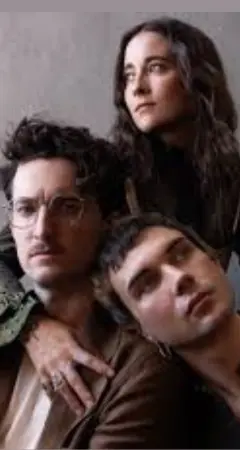
I got to see Brooklyn’s Nation of Language open for Death Cab for Cutie’s Ben Gibbard last year. I quickly heard the post/punk new wave influence - the lyrical focus on interpersonal struggles that Joy Division specialized in, and there’s some New Order DNA in there too (besides just the trio format with female keyboardist). But Nation of Language gives it their own spin - in the face of the angst spelled out in their songs, vocalist Richard Devaney doesn’t have Ian Curtis’ derision, but rather cranks up the melancholy. Now about the synths - Aidan Noell’s synths are slower than New Order’s Gillian, with the intent to hypnotize. Aidan also favors synths that slide in pitch, rather than the precision of her predecessors. This has the effect of a Siren call that not just expresses angst, but gets you involved with it.
Take Wounds of Love - Devaney tells his partner that they don’t belong in his heart. Alone, that would be cliche, but other lyrics drive that point home hard (e.g. “I could never say it enough”). And the band respects the inward angst angle but doesn't keep it in a vacuum. Case in point: in Wounds, Devaney gets others involved by complaining that his friends pressured him to stay in his broken relationship.
Taken together, Nation of Language’s synths, vocals, and lyrics aren’t just expressive tools: they’re coordinated, designed to slow the listener down, suspend resolution, and keep you emotionally inside the song. Devaney often sounds like he’s trapped in a trance and can’t break free. More importantly, the band lures and traps you to them, like a pitcher plant slowly capturing its prey.
Honorable Mention
The four artists/bands I mentioned are a good intro to new-wave infused current music. But these other bands take it from different angles worth exploring too:
- Wet Leg channels new wave’s irony gene - think deadpan detachment, repetition, and emotional distance. But they swap narrative depth for minimalist attitude and performative cool.
- Wargasm carries forward new wave’s confrontational streak, fusing synthetic texture with provocation and industrial hostility.
- Black Country, New Road inherits the genre’s intellectual ambition, using literate, anxious storytelling and shifting structures as emotional architecture rather than release.
- Confidence Man revives new wave’s embrace of absurdity, pairing synth-driven pleasure with exaggerated performance.
- Working Men’s Club taps its austere motorik core, favoring repetition, restraint, and physical momentum over hooks.
Outro
New wave never endured because of synthesizers or hairstyles. It endured because it treated pop music as a system: balancing tension and release, irony and sincerity, spectacle and restraint. What these 2020s artists demonstrate isn’t imitation, but continuity: the same emotional tools reconfigured for a different moment. Back to the present doesn’t mean retreating into the past. It means recognizing that new wave’s most durable ideas were always designed to outlive their era.
A new one every month.
($8/month USD) Secure checkout with Gumroad

Just Released on Synth and Swagger:
Album Deepdive: Falco 3Pop-Up Video Commentary: Howard Jones' Things Can Only Get Better