


Intro
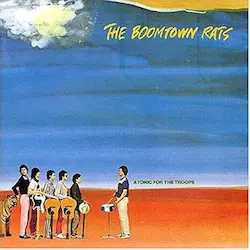
The Boomtown Rats, with frontman Bob Geldof (later of Band Aid and Live Aid fame), debuted in 1977. While punk was an unmistakable influence, the Irish band drew freely from other styles, depending on what each song demanded. For example, the Springsteen-esque street opera of Joey's On the Street Again. For their followup Tonic For the Troops, they leaned further in that direction. But even more striking was Geldof’s expanding lyrical imagination. Dictators, recluses, suicide, and everyday absurdities all received his trademark acerbic-absurd combo platter, often wrapped in deceptively catchy music. The Boomtown Rats had already made a splash in the UK with their 1977 debut, producing two top-15 singles. A Tonic for the Troops built on that momentum, producing three increasingly successful hits, culminating in the chart-topping Rat Trap.Like Clockwork
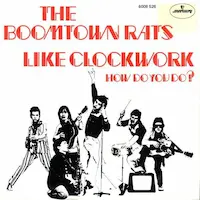
Tonic draws you in immediately with the tick-tock tick-tock intro of Like Clockwork (and reprised later). Co-written by Geldof, bassist Pete Briquette, and drummer Simon Crowe, Geldof boasts that he’s in tune with the world and creative, but then provides examples of the opposite - his focus on keeping time and efficiency has turned him into a monotone automaton. In the second verse he brings up a similar vignette - a woman forms a philosophy around time, but really it’s ruling her. By the third verse, the Rats zoom out to life's ultimate deadline: death. Counting every minute seems especially absurd when nobody gets out alive. And, a theme throughout the album, Geldof's vocals land somewhere between Elvis Costello's acerbic bite and Fred Schneider's (of the B-52s) theatrical absurdity. His exaggerated inflections and elastic timing make even the most unsettling observations sound mischievously entertaining. Musically, Like Clockwork takes the repetitive drive of punk, with the drums and guitars locking into an unusually rigid groove. It reinforces the idea of time as a relentless overlord. And a cowbell (don’t worry, it’s subtle) puts the song further in lockstep. Occasional unruly piano flourishes threaten to upset the orderly proceedings, as if the song itself is resisting the tyranny of the clock.
▶
Preview Like Clockwork
Boomtown Rats
Blind Date
For their second song, the Boomtown Rats shift gears to the lighter-hearted Blind Date. It’s a glam-punk hybrid, but the Rats are not afraid to bring in a harmonica for street opera flair. It’s a simple-but-effective analysis of blind dating, with lyrics like “you take a jump into the unknown” and “love’s dice are thrown”. Geldof refers to dating ads in the newspapers, but somehow manages a computer dating reference (remember, 1978), making it eerily similar to today’s dating woes.(I Never Loved) Eva Braun
Ron Mael of Sparks caused a stir in the mid-’70s with a mustache that bore an unfortunate resemblance to Hitler’s. But Bob Geldof went considerably further on (I Never Loved) Eva Braun, putting himself in the dictator’s shoes for a bizarrely flippant account of his relationship with Eva Braun. He's inexplicably preoccupied with denying his romantic attachment to Eva, as though this trivial detail might overshadow his conquests and atrocities. Its satire lies in Hitler repeatedly batting away those rumors, while glossing over his conquering of Europe and genocide (“oh yeah, i conquered all those countries”). Save Rat Trap, Eva Braun is the longest song on Tonic. In line with the scope of its subject, the instrumentation is allowed to breathe and the arrangements are more ambitious. For example, Fingers’ dramatic piano and the dramatic “la-la-la” outro. So it draws elements from their street operas like Rat Trap.Living in an Island
Living in an Island, apropos to the title, sounds like sun-kissed delight, using late-70s fascination with reggae and other Carribbean stylings. A farfisa-like organ, along with a ‘50s callback chorus “no it won’t happen to me” add to the pep. But it belies its status as one of the most deceptively disturbing new wave songs - Geldof vividly describes a series of suicides - think lines like “a man slit his wrist, his head ticked over and suddenly slipped away”. He even recommends suicide to someone on the phone (the caller ultimately rejects it). And Geldof actually dials back his signature vocal style in favor of the upbeat, so it’s harder to pick up on his sarcasm. This speaks to the increased level of sophistication of Tonic - as well as the Rats’ ability to keep you guessing.Don't Believe What Your Read
After the heavy trickery of Island, the Boomtown Rats offer Don’t Believe What You Read. In most albums, this wouldn’t be considered a palate-cleanser, given its attack on misinformation in books. But compared to the sonic richness and duality of Tonic, the stripped-down Read qualifies. Musically, it’s a hard-and-fast guitar assault, combining the Ramones’ no-nonsense punk drive with the glam-rock exuberance of Sweet’s Ballroom Blitz. And while Don’t Believe was released almost 50 years ago, it’s a warning to be vigilant in the face of bias in books and newspapers by reading critically, an especially salient point today.She's So Modern
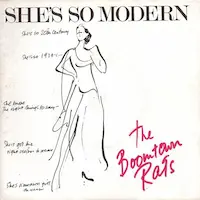
She’s So Modern has Fingers and Geldof at the writing helm, and they decide to go the playful route, stuffing it with oldies hooks with more direct music than on tracks like Living in an Island. But make no mistake, the listener isn’t off the hook: She’s So Modern still manages societal swipes - this time at conformity that masquerades as individuality. Drawn from the rebellious and independent women of the punk scene, Geldof points out that they can still chase trends. Fast-forward nearly 50 years, and these fashionable provocateurs would fit right into Instagram and TikTok. After all, what’s more modern than expressing your individuality by following the same trends as everyone else?▶
Preview She's So Modern
Boomtown Rats
Me and Howard Hughes
Me and Howard Hughes has a complex story in that the subject is arguably not Howard Hughes, but someone who’s obsessed with emulating and identifying with the reclusive billionaire. Geldof’s switches between first and third person suggests we walked into the narrator creating the persona before he inhabits it. Like the real-life Hughes, the narrator’s intense germophobia actually harms him, evidenced with lines like “flies everywhere fill my body with disease”. Musically, Me and Howard Hughes resembles Eva Braun, but the grandeur is dialed back to reflect the more intimate stakes of this vignette compared to Hitler.Can't Stop
Can’t Stop is by far Tonic’s shortest track at 2:19, but it feels like the Rats crammed in four minutes of music. For one, it jumps right into a chorus. Then there’s Johnnie Fingers’ testing his finger dexterity with delightfully frantic keyboards, complete with strange accent notes. This suggests the narrator is in a full-blown panic (possibly drug-induced). And Geldof is up for the challenge and responds with rapid-fire, unhinged vocals. This makes Can’t Stop a delightful adrenaline rush and nice change of pace from the storytelling of many other tracks on Tonic.(Watch Out For) The Normal People
(Watch Out For) The Normal People has an interesting twist in that Geldof plays the role of a normal person, with the listener being the outsider. Whatever that is. He details how he and the other “normal” people maintain their mundane front, while betraying that it’s just a front. But Geldof gets increasingly more menacing, suggesting normalcy will be harshly imposed when (not if) the listener is exposed. As with other songs on Tonic, the Rats draw on a different contemporary style - in this case, power pop. But it’s not Cheap Trick - it’s weaponized, further selling the Geldof threat.Rat Trap
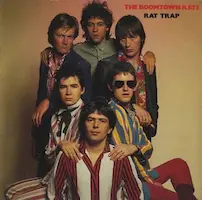
The Rats’ magnum opus was saved for last in Rat Trap. First off, the Boomtown Rats sometimes employed their brand for clever wordplay - hence the song title Rat Trap. Set in a boomtown well into its bust phase, the song portrays a city that traps its residents in a vicious cycle, with as little regard for their well-being as humans show trapped rats. It hones the Rats’ style of street opera from Joey’s on the Street Again. Similar to Springsteen songs like Jungleland, Rat Trap has a galloping, R&B-flavored saxophone and piano. In a departure from punchy punk songs of the day, Rat Trap also has a cinematic storytelling style, and working-class characters hemmed in by their surroundings. The Rats were now matching Geldof's increasingly ambitious storytelling with arrangements expansive enough to accommodate it. In line with the music, the lyrics are extensive and paint a detailed picture of working class urban strife through a Billy character. It’s dreary but definitely not peaceful - whether it be street fighting or domestic fighting. In the case of the latter, Billy’s girlfriend or friend Judy is pondering dropping out of school for a factory job (precarious in late 70s Britain). Rat Trap is a pivotal single - it’s the Rats’ first UK chart topper and sets the stage for their international breakthrough of their next album. But it also works within Tonic as a gutsy choice for album closer (in the UK), sending its audience off with a hearty declaration that they’re screwed… unless they outsmart the trap.▶
Preview Rat Trap
Boomtown Rats
Preview Boomtown RatsOutro
A Tonic for the Troops marked a significant leap for the Boomtown Rats, both commercially and creatively. The musical variety is striking, but Tonic shines largely due to its recurring fascination with people trapped by their circumstances, obsessions, or social expectations. Indeed, Geldof’s increasingly ambitious storytelling and the band’s willingness to venture beyond punk established the template they would refine on The Fine Art of Surfacing, their breakthrough in much of the world beyond the British Isles. Yet Tonic stands comfortably on its own: a collection of infectious songs populated by some decidedly uncomfortable characters, delivered with equal measures of wit, irreverence, and theatrical flair.Like this article? The Vault has bonus writeups on five articles.
A new one every month.
($8/month USD) Secure checkout with Gumroad