



Intro
The Cars had a reputation among casual fans of being a singles band (because of their big hits with videos in 1984-85), but their album tracks are rock solid. They come from the Power Pop and Skinny Tie Brigade wing of new wave. Outside the style, they share similarities to power pop bands like Cheap Trick and Loverboy. Nevertheless, they’re a new wave band through-and-through: Ocasek straddles a fine line between detachment and emotion, delivered with an ironic wink. And though at first just as an accent, they were early adopters of the synth. Later albums melded it well with their guitars and drums.
Across the late ’70s and early ’80s, the Cars mirrored rock’s own transition: from the analog jangle of power pop to the glossy digital polish of MTV. While the Talking Heads got more critical acclaim, the Cars also had talent in spades. And they had a similar evolution in that they got groovier and then glossier.
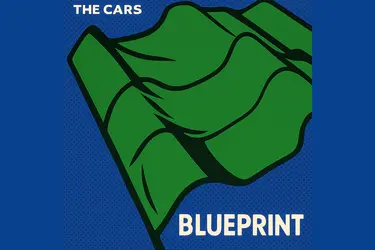
Blueprint (Self-Titled)
The Cars got their big break with Just What I Needed - it received heavy radioplay in their homebase of Boston before going national. Boston’s club scene in the late ’70s had plenty of punk noise and pub-rock swagger, For many Bostonians (and eventually Americans), the Cars’ power-pop and ‘70s rock underpinnings were a comfortable transition to the trappings of new wave. But the Cars brought something new to the mix - studio precision disguised as spontaneity. Producer Roy Thomas Baker gave the Cars’ debut Queen-like multi-tracking precision (but fortunately less of the bombast). It was the sound of a new decade arriving early - retro chord changes wired to synthetic precision.
My Best Friend’s Girl is a solid portrait of someone who had lost his girlfriend to his best friend. He’s still pining over her, as he “likes the way she dips”. Sonically it’s a ‘50s throwback, complete with rockabilly rhythm, chanting of the song title in the outro, and the “yeah yeah yeahs”. While the Cars were already including synth flourishes in their tracks, My Best Friend’s Girl has none.

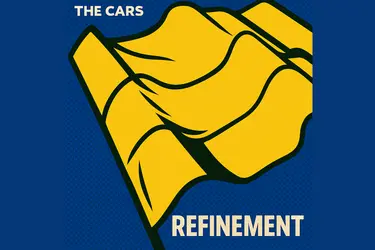
Refinement (Candy-O)
With their sophomore effort Candy-O, the Cars once again called on Baker to produce. With his return, the Cars tightened their grooves and better integrated synths into their songs. Paired with their usual cool, ironic vocals, and guitar power chords, it was an intriguing mix. This sleekness paid off in the charts (for both the album and its singles). If the debut hinted at modernity, Candy-O parked them squarely beside Blondie and the Knack in the late-’70s fast lane.
Let’s Go exemplifies this sonic shift in the Cars. The intro features a squirmy synth, reminiscent of Split Enz' I Got You a year later. In fact, it was a quite early example of synth hooks in mainstream rock (Del Shannon aside). That being said, the power-pop flourishes of their debut album are still present, an example the tight gang-clap before their shouting “Let’s go!”. The rhythm section of Let’s Go, along with vocalist Benjamin Orr’s sleek vocals, reflects the album’s move toward danceability for the band.
Experimentation (Panorama)
Having refined their formula with Candy-O, the Cars went in a different direction in their third album Panorama. Despite the potential (and actual) backlash about this (“It’s too cold!” some said), Ocasek was determined “to avoid formula”. The synths are again more prominent but take an eerie turn (for example, the chorus of Running to You and the outro to Gimme Some Slack). And buried beneath the chill are propulsive tracks like the lead single Touch and Go, whose jerky rhythm anticipates post-punk minimalism. If Candy-O was chrome and leather, Panorama was bare metal - unpainted, industrial, and unapologetically weird.
The title track is one of their most synth-driven and experimental tracks. Ocasek delivers a droning mantra with “I just want to be in your panorama” paired with a vocoder at the time only the coldest synthpoppers were employing (I’m looking at you, Mr. Numan!). And with its excellent execution, it’s quite rewarding. The guitars are muted, and drums are clipped, all with heavy reverb. The heavy, repetitive sonics swirls remind me of the Cure’s A Forest two years later. Could they have been influenced by Panorama?
Back to Basics (Shake it Up)
For their followup, the Cars shook off the complexity and claustrophobia of Panorama, and added a heavy dose of pep for the album Shake It Up. While the Cars were always cool, now they were also fun. The title tracks (and whole albums for that matter) are reverses of each other. While tracks like Since You’re Gone and Cruiser are still angular, they are certainly more upbeat. It’s also interesting that at the time the Talking Heads were also getting groovier (with their polyrhythms). If Panorama was the Cars under caution, Shake It Up dropped the green flag again.
Granted, the chorus of Shake It Up is also repetitive. But with Ocasek’s charging vocals and their signature power pop instrumentation, it’s meant to rally, rather than hypnotize. The album title, along with the songs themselves, indicate that the Cars are now injecting a bit of danceability to their music. The title has a propulsive rhythm section to this end.
Apex of Style (Heartbeat City)
After four albums in four years, the Cars took three years to make Heartbeat City. This is an eternity in the new wave era: Its landscaped changed a lot during that time. Music video quality greatly jumped, and the synths and other instruments developed a glossy sheen. Fortunately, the Cars were keen on these changes, tweaking their sound and calling on Mutt Lange. Fresh off of producing for Def Leppard and AC/DC, he helped make the Cars look larger than life. The result was their biggest commercial smash (by far). Indicative of the album title, Heartbeat City is full of heart and big. If earlier albums revved with irony, Heartbeat City idled with sincerity - the final gleam before burnout.
The lead single You Might Think shows this new approach: The guitars have the usual horsepower, but in the main riff they are paired note-for-note with a glossy synth, encapsulating the Cars’ full melding of guitars and synths. And of course the iconic video, which effectively enhances the lyrics (about a guy relentlessly trying to win over his crush). For 1984 the special effects are cutting-edge, and Ocasek literally goes ape over and bugs his love interest.
Drive was an excellent choice for a followup single. It shows a new side of the Cars, delivering raw vulnerability (while still managing a car metaphor). Drive trades the Cars’ usual detachment for vulnerability, gliding on a slow, glassy synth bed and minimal percussion that feels suspended in air. Benjamin Orr’s gentle, unguarded vocal gives the song its ache - pleading, “Who’s gonna drive you home tonight?” with both resignation and care. Lyrically, it’s a quiet reckoning with emotional distance: the machine has stopped humming, and what’s left is pure human tenderness beneath the chrome. And while I like Ocasek’s unique vocal style, the Cars made the right choice in tapping the more vocally vulnerable Benjamin Orr for this track.
When Drive hit MTV, it startled fans - this was the Cars with the mask off. The video, later tied to Live Aid’s humanitarian montage, amplified the song’s ache. Suddenly their trademark detachment felt human.
Preview The CarsAvailable in the Vault
Denouement
Unfortunately, the Cars couldn’t sustain the monster momentum of Heartbeat City and its two non-album singles. Their 1987 follow-up, Door to Door, felt out of step with the times—pleasant but thin compared to the high-octane precision of You Might Think or Tonight She Comes. Ocasek went on to produce Weezer for their debut, helping propel them to stardom. Later, Benjamin Orr’s passing in 2000 closed one chapter for good. Yet a decade after that, Move Like This proved the band could still deliver a sleek, streamlined ride, even if the engine no longer purred quite the same (as an aside, I saw them in concert for the first time as they supported this album).
Across five albums, the Cars traced pop’s metamorphosis from chrome to circuitry - from tight rock craftsmanship to digital gloss. They built a bridge between Buddy Holly hooks and MTV futurism, between irony and emotion, between the garage and the soundstage. Even when their tanks ran low, the Cars had already finished the race, leaving behind one of new wave’s smoothest, smartest bodies of work.
A new one every month.
($8/month USD) Secure checkout with Gumroad

This Week on Synth and Swagger:
Artist Spotlight: Do the Bangles JangleOceania New Wave Song Commentaries (3 free, 6 vault)
Coming Thursday - New Wave Quick Hit