



Intro
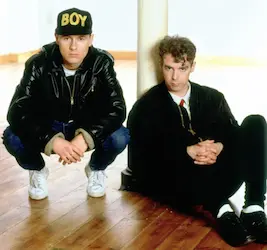
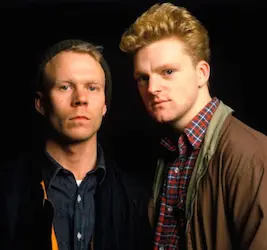
The Pet Shop Boys and Erasure are often thought of as similar bands. And yes, there is a shared pedigree: in the early ‘80s, New Order increasingly gave their post-punk stylings dance rhythms, with the synthesizer gaining prominence. It was dubbed “alternative dance”. But unlike club music, these tracks also had pop hooks and humanity in the lyrics. The Pet Shop Boys and Erasure continued this pattern, leading to a style that is not new wave but closely related. But Pet Shop Boys vocalist Neil Tennant once argued they were very different bands. Indeed, there are key differences between them, which led to two exciting interpretations of the alternative dance sound.Genesis
Tennant, then a journalist for Smash Hits magazine, met Lowe and they quickly bonded over their shared love of dance music and synthesizers. With the help of Moroder disciple Bobby “O” Orlando, they recorded the first version of “West End Girls,” already blending dance rhythms with pop instincts and Tennant’s detached irony Half of Erasure is synth wizard and new wave veteran Vince Clarke. After leaving Depeche Mode, Vince, as a member of synth duo Yazoo, flirted with dance inclinations on many of their songs, Situation and Don’t Go being prominent examples. He continued this with Erasure. Vocalist Andy Bell had soulful vocals, reminiscent of Yazoo’s Alison Moyet, with incredible range to boot. That left the two duos with similar raw materials but very different human centers: Tennant the dry observer, Bell the emotional participant.Distance vs Passion
Let’s look at how Pet Shop Boys and Erasure tackle relationship issues. In Rent, Chris Lowe expresses those relationship problems by leaning on a slightly melancholic atmosphere - with warm, sustained synth notes in the intro and verses. The rhythm has a dance propulsion to it, but like some air has been let out of the balloon. And Neil’s vocals are also deflated - slightly trailing at the end (a bit like Robert Smith of the Cure) as he’s weary of being bought at the expense of his hopes and dreams. So by the time we get to his “I love you”, and even before “you pay my rent”, it’s obvious this love is highly compromised. This tension between affection and transaction is a theme in other Pet Shop Boys songs. Erasure’s Sometimes goes for emotion right out of the gate with an intro wail from Bell, reprised in the bridge. Throughout, Bell convinces us he can’t contain his emotion by stretching syllables and bending notes. And the lyrics go straight for the emotional jugular, with lines like “we fall in ecstasy”. That’s not to say Sometimes is straightforward bliss - lines like “it’s the broken heart that decides” add ambiguity that there’s a dark underbelly. On the synth side of the coin, Clarke uses grand sweeps to set the table for Bell. And Clarke’s rhythms have more pep than Lowe’s in Rent, with countersynths at the ready to stir the emotional pot. But I can sense something’s a little off emotionally, thanks to darker harmonic shades that sometimes creep in.
▶
Preview Rent
Pet Shop Boys
▶
Preview Sometimes
Erasure
Social Issues
While Pet Shop Boys and Erasure usually went personal, they didn’t shy from social issues, and that says a lot about their different approaches. Suburbia and the Circus are clear examples. In Suburbia, Lowe’s instrumentation and Tennant’s vocals are upbeat in a plastic, ironic sense, mirroring the theme of suburbia looking pristine, while actually being “hell”. Tennant is describing this hell at an emotional distance with lines like “in the distance, a police car”. Circus, on the other hand, zooms in, with Bell describing the pieces his own dad had to pick up after falling victim to deindustrialization. Rather than the mostly-monologue style of Suburbia, Bell makes things more personal by using the second person more (“you were strong, you used to belong”). Like Suburbia, there is irony in the instrumentation: Clarke uses a circus-like melody to reflect the absurd circus that is deindustrialization. But it’s good at getting out of the way of Bell’s lamentful vocals - the most prominent circus motif is saved for the instrumental bridge.▶
Preview Suburbia
Pet Shop Boys
▶
Preview The Circus
Erasure
The Pet Shop Boys and Erasure could both get dramatic, but had different modus operandis to achieve it. It’s a Sin, along with many other Pet Shop Boys tracks, would not be out of place in a Broadway production. While there is an autobiographical element to Sin, as Tennant described himself as a “lapsed Catholic”, you sense that the drama is larger than him. It’s really a broad criticism of religion, with the intangible forces of confession, guilt, and judgement the stars. The dramatic orchestral flourishes support this, along with Lowe’s dissonant synths. Even its video is lavish, with fire and judgmental, larger-than-human clerics. Tennant (on purpose) melts into it, shying away from the camera. In A Little Respect, Andy keeps the drama tightly focused on himself. This is done with his soulful flourishes and his penchant for octave-jumping. And Bell, stuck in an emotional one-way relationship, touches on overlooked aspects of that with lines like “I try to discover a little something to make me sweeter”. And for the sake of keeping it personal, Clarke’s synths don’t compete with Bell’s emotion, but are still propulsive and upbeat, giving Bell (and the listener) hope that he’ll finally get his lover’s respect.
▶
Preview It's a Sin
Pet Shop Boys
▶
Preview A Little Respect
Erasure
Expanding the Palette
Finally, the Pet Shop Boys and Erasure differed on how they expanded their sonic palette. Tennant was correct in calling Erasure “synth purists”. They ventured outside the synth realm less, whereas the Pet Shop Boys readily folded in orchestras and sometimes guitars. As alluded to earlier, the Pet Shop Boys often brought in orchestral instrumentation to give their songs a larger than life feel. But they also have many songs with traditional pop structures but also some that had a more dance club backbone. The proof is in the pudding with their third album Introspective, where every track clocked in at over six minutes. For example, like in a lot of club music, the album version of Domino Dancing is an extended arrangement, that sometimes drops into a breakdown, isolating and developing one of the track’s riffs before returning to the main song. Erasure stayed within the pop format much more (save their 1995 self-titled album). But that’s not to say they were stagnant - Clarke was quite inventive at coaxing a wide variety of timbres and moods from his synthesizers. For example, the song Don’t Dance has a sliding synth to help propel it, and It Doesn’t Have to Be has a rapidfire drum sequence and later complements Bell’s Swahili bridge with clipped, African-influenced percussion and a bright, mallet-like synth timbre. This helps support the song’s anti-apartheid theme. The difference wasn’t really experimentation versus conservatism. Pet Shop Boys expanded outward, treating synth-pop as a base from which they could pull in orchestras, guitars and extended club structures. Clarke often expanded inward, finding new rhythms, timbres and textures while keeping the synthesizer itself at the center.▶
Preview Domino Dancing
Pet Shop Boys
▶
Preview It Doesn't Have to Be
Erasure
Outro
Pet Shop Boys and Erasure showed there was plenty of life after new wave. Both carried its synthesizers, dance rhythms and pop instincts forward, but hardly in lockstep. Tennant and Lowe often stepped back, observing human absurdities while expanding their sound outward. Bell and Clarke stayed closer to synth-pop’s core, but filled it with passion and an impressive range of electronic colors. New Order may have helped build the bridge; these two crossed it in very different directions.A new one every month.
($8/month USD) Secure checkout with Gumroad

This Week on Synth and Swagger:
Just Released: Beyond New Wave: Pet Shop Boys and Erasure - Immediate FollowersThursday: New Wave Quick Hit
Friday: Playlist of the Week