


Intro
As with any music movement, new wave stood on the shoulder of giants. Elvis (not Costello) set the bar for showmanship. A bit later, Del Shannon popularized the darkening of minor chords and yanked synths out of B-movies and into the music charts. New wavers embraced both. But let’s look at the four major acts that informed different branches of new wave.Martin Fry became Ferry’s de facto successor, with his penchant for suits and velvety crooning punctuated with vocal stabs
Kraftwerk
Del Shannon was the Big Bang for synthesizers, but were only used for accents in his songs. A decade later Kraftwerk flipped the script - synths were dominant. At first they were unknown outside Germany but 1974’s worldwide smash album Autobahn changed all that. This offered new wavers fresh avenues for sonic and emotional expression. Earlier synthpoppers used them to create dystopia and funeral environments. Later artists warmed them up, giving them optimistic or even Zen qualities.Human League (early)
Debuting in 1979, the Human League made a conscious choice not to use guitars, one of the first bands outside of krautrock to do so. And some of the tracks had sustained synth notes to the degree of Kraftwerk, such as Morale. And even one of their singles, Empire State Human, uses a Kraftwerk-sounding synth line in the chorus. True, Oakey’s mostly sung and unprocessed vocals differed from Kraftwerk’s vocoder-tinged accent vocals. But Oakey’s delivery was purposely robotic and sustained, matching the synths. Kraftwerk had a clinical sound but rarely sounded cold. The Human League twisted these synths to add a coldness and even occasional menace, the foundations of early synthpop.Gary Numan
Gary Numan also was a Kraftwerk acolyte, embracing all things synth. Even with his hit Cars, the last minute and 20 has no vocals, recalling Kraftwerk but thanks to the brighter and tighter notes, doesn’t imitate it. And to those familiar with Human League from Don't You Want Me and beyond, it’s hard to believe but Numan’s songs were sonically more accessible. Numan pumps a bit more emotion in his vocals, and the synths lines are more in line with later synthpop than the droning of Kraftwerk. And this is all done in the service of selling you on his ominous tales of technology and isolation, including the robot killing spree of Down in the Park.Later Kraftwerk followers: Howard Jones, Thomas Dolby, A-Ha
 Preview Kraftwerk
Punk
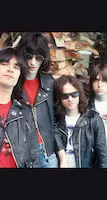
As new wave morphed from punk, it’s natural that punk is the OG influence. This is evident with crossover acts like Ian Dury and the Stranglers. Velvet Underground set the table with their strong, repetitive guitar riffs and Lou Reed’s disaffected vocals. While punk exploded in Britain through bands like the Sex Pistols and the Clash, new wave’s earliest experiments came out of New York’s CBGB scene, using Queens’ Ramones as a springboard. The Ramones took oldies movements like Chuck Berry, girl group pop and surf and boiled them down to the basics and were sped up.Blondie
Hot on the heels of the Ramones’ debut, Blondie released arguably the first new wave album near the end of 1976. And it also had those girl group and surf elements. Debbie Harry tempered Joey Ramone’s snarl with cool detachment, and the melodies were slowed a bit. Blondie, like the Ramones, were pop-culture and New York fiends. But they put their unique twist on these references, stepping back and framing it artistically rather than brashly celebrating it. For example, A Shark in Jets Clothing is polished and complete with finger snaps. In fact, it could easily be the flagship song for a ‘70s West Side Story remake. The Ramones, on the other hand, put their lo-fi spin on these tales.Talking Heads
The Talking Heads were also in the CBGB orbit, and their early sound had repetitive guitar riffs indicative of punk. But David Byrne’s clipped, anxious vocals up the ante from Lou Reed’s arresting sing-speak vocals with proto-punkers Velvet Underground. Frantz, Harrison and Weymouth had those punkish drum and guitar riffs, but like Underground they also incorporate art rock into their sonic palette. Psycho Killer is a great example: it deviates from traditional punk with its quick sonic and lyrical shifts - like Byrne imitating a march in the bridge (and in French!)Other punk followers: Elvis Costello, the Cars, Joe Jackson
David Bowie
For the showmanship and aesthetic aspects of new wave, David Bowie has no equal. Much like Presley in the ‘50s, Bowie took it to the next level, beginning with Space Oddity. Then comes his career manifesto in Changes. Soon after, Bowie goes full throttle with the androgyny of Ziggy Stardust. Bowie also emboldened later artists to experiment between or even within albums. For example, his acclaimed “Bowie trilogy” starts from scratch with, of all things, Kraftwerk and Eno synth flourishes. The same goes for his aesthetic, which shifted to slicked hair and avant-garde European outfits.Japan
A cult favorite, Japan is the earliest new wave band with heavy Bowie fingerprints. The band, spearheaded by David Sylvian, went glam in the vein of Bowie’s Ziggy Stardust, both in look and sound. Sylvian had a punkish snarl but with glam’s exaggerated flourishes and mid-word slides. And then, just like that they kickstarted the new romantic faction of new wave. Out with the big hair, in with the Bowie Berlin-era look. But there are more parallels: Japan’s songs became longer, giving their arrangements breathing room. And Japan pull back the emotion, resulting in a suave, European-style detachment.Duran Duran
According to Captain Obvious, Duran Duran were very fashion-forward like Bowie, on full display in their tours and promos. They also applied this playbook successfully to the fledgling music video realm. But a sometimes-overlooked aspect of them is their chameleon sonics and aesthetics ala Bowie. Their debut album had the suave moodiness and sliding synths of Japan. But with Rio they glammed the guitars and brightened the synths, and kept the changes going for fourteen more albums. And like Bowie, some of these ch-ch-changes were risky and occasionally even backfired (Thank You, Glass Spiders), but they rebounded quickly.Other Bowie followers: Visage, Gary Numan, Simple Minds
Preview David BowieRoxy Music
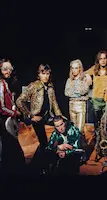
Roxy Music was inspired by Bowie’s glam aesthetics and complemented it with avant-garde melodies. This was thanks to Eno’s experimental use of electronic sounds with synths and traditional piano. And example is the intense electronic warbling in the bridge of Editions of You.After Eno’s departure from Roxy Music, vocalist Bryan Ferry slowly dialed back Roxy’s eccentricities in favor of suave sophistication. For instance, Ferry traded his leopard pants for suits and vocal stabs for croons. As the new romantic movement emerged, the balance of Roxy Music's influence shifted from Eno to Ferry. New wavers became less interested in experimentation for its own sake and more interested in Ferry's sophistication, romance, and style.
Foxx-era Ultravox (Eno)
In 1977,Ultravox tapped Eno himself to co-produce their debut, so it isn’t bold to say they’re one of the closest followers of early Roxy. With Eno’s advice, Foxx wove textured synthesizers into Ultravox’s songs. For instance, with My Sex plays like an early Roxy Music song with its keyboard intro and surreal lyrics. But Foxx gives it his own spin by cranking up the detachment past Ferry levels. And My Sex has a synth solo for the chorus, boldly expanding on a signature Roxy-style flourish. Once Foxx left for Ure, Ultravox 2.0 shifted toward a more emotional synthpop style. In that sense, Foxx-era Ultravox served as a bridge between Roxy's art-rock experimentation and the more accessible electronic music that would dominate the early 1980s.ABC (Ferry)
ABC, as part of the new romantic movement, turned to latter Roxy for inspiration In fact, Martin Fry became Ferry’s de facto successor, with his penchant for suits and velvety crooning selectively punctuated with vocal stabs. And while ABC used synths a lot more than latter-Roxy, the instrumentation still cooperates with, rather than challenges, Fry. That being said, ABC had a subversive streak that distinguished themselves. Fry wove a real-life rejection into Poison Arrow and then spent The Look of Love (Part One!) trying to convince himself he was over it. Like Ferry, Fry presented romance as something stylish, urbane, and slightly theatrical rather than raw or confessional (see the cover to Lexicon of Love and the Look of Love video).Other Roxy followers: Spandau Ballet, Duran Duran, OMD
Preview Roxy MusicAvailable in the Vault
Outro
New wave wasn't sparked by any one artist, but rather was organic and multi-faceted. Kraftwerk provided the machines. Punk provided the urgency. Bowie provided the theatricality. Roxy Music provided the sophistication. Different bands mixed those ingredients in different proportions, which is why Human League, Blondie, Duran Duran, and ABC all sound distinct despite belonging to the same movement.A new one every month.
($8/month USD) Secure checkout with Gumroad

This Week on Synth and Swagger:
Just Released: Beyond New Wave: Pet Shop Boys and Erasure - Immediate FollowersThursday: New Wave Quick Hit
Friday: Playlist of the Week